Tennis elbow warning: Throw away these two types of rackets immediately! (And what to replace them with)
When you start to feel a dull ache in your elbows, or even find it difficult to grip the paddle, you may have heard the common saying, “It must be your form that’s wrong.” That’s true, but as a pickleball equipment expert, I have to tell you a more brutal truth: bad equipment can amplify your mistakes 10 times, and even with perfect form, it can still ruin your elbows.
I’ve personally experienced arm pain caused by choosing the wrong paddle, and that period made me realize that equipment is not just a tool but an extension of your body. If you are suffering from tennis elbow or want to take preventative measures, then please be aware: vibration—this invisible killer—is slowly eroding your tendons through your paddle.
Warning! If you are using either of these two paddles, even if your form is as perfect as Ben Johns’, your elbows will still continue to be damaged.
Culprit #1: “Featherweight” paddles (< 7.5 oz) – Why are lighter paddles more likely to hurt your hands?
Fatal misconception: Is a lightweight paddle a “savior” for hand pain?
This is the most common and fatal intuitive error I’ve ever heard: “Since my hand hurts, I’ll use a lighter paddle to reduce the burden, which should make it better, right?” On the surface, it seems reasonable, but the reality is quite the opposite.
The physical truth: Insufficient mass backfires.
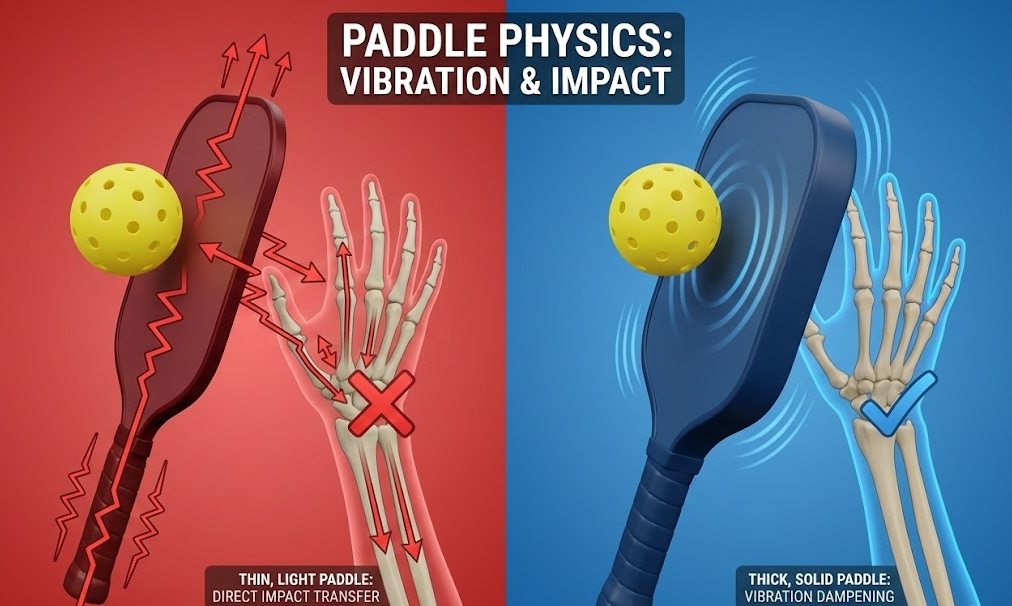
Let’s return to the basic principle of physics: $F=ma$. When a heavy pickleball strikes your paddle at high speed, it generates tremendous impact force. If your paddle is too light (e.g., less than 7.5 ounces), it doesn’t have enough “inertia” and “mass” to effectively resist and absorb this impact energy.
Imagine hitting a hard rock with a lightweight plastic toy hammer; almost all the reaction force is transmitted to your hand intact. The same applies to pickleball paddles. The paddle’s mass is insufficient to counteract the ball’s kinetic energy, resulting in this enormous impact not disappearing into thin air but traveling directly through the paddle, up your arm, and striking your vulnerable, already injured tendons.
Serious consequences: Vibration amplifier
Based on my testing experience, paddles weighing less than 7.5 ounces produce a noticeable “vibration” at the moment of impact. This vibration is a major cause of micro-injuries in the arm. Instead of being a “savior,” a light paddle amplifies the vibration, increasing the burden on your elbow and making tennis elbow even worse.
Culprit #2: “Thin” paddles (< 14mm / hard core) – missing shock absorber
Hidden Trap: The Pursuit of Power at the Cost of Health
The second common type of “elbow killer” is thin-core paddles (e.g., those with a core thickness of less than 14 mm) designed for maximum power output or inexpensive wooden or aluminum core paddles. Many players choose these paddles for faster swing speed or a “crisper” feel but ignore the potential damage they can cause.
The physical truth: barefoot jumping on concrete vs. air-cushioned shoes
We can think of the core of a paddle as the sole of your shoe. A thin-core paddle is like jumping barefoot on hard concrete, without any cushioning, while a thick-core paddle is like wearing a pair of running shoes with air cushioning, which can effectively absorb impact.
Thin-core paddles have an extremely short dwell time (the time the ball stays on the paddle face). This means that the ball bounces back at an extremely high speed after contacting the paddle face, and the impact force at the moment of impact is extremely strong and brief. This high-frequency, direct vibration, without sufficient cushioning structure to absorb and disperse, will accumulate micro-trauma to the tendons like countless small hammer blows.
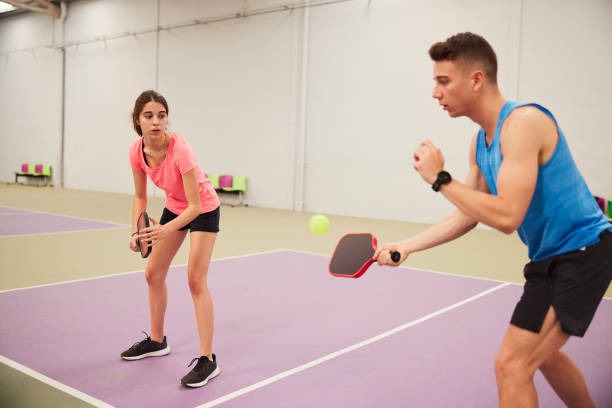
Serious Consequences: The Culprit Behind Tendinitis
I’ve found that players who use thin-core or hard-core paddles for extended periods are more likely to complain of hand vibrations and elbow pain upon hitting the ball. These paddles are like a race car without shock absorbers; while they may provide a sense of speed, every bump causes a huge impact on the driver. This lack of cushioning in the hitting experience is a direct cause of tendinitis.
The “Extra” Culprit: Incorrect Grip Size—The Cost of the Death Grip
Besides the physical characteristics of the paddle itself, an often overlooked factor is your grip size.
Root cause of the problem: Death Grip
If your grip is too thin, you’ll subconsciously grip the paddle tighter, afraid it will slip out of your hand. This excessive “death grip” will cause your arm muscles to be in a state of constant tension.
Chain reaction: Muscles are shock absorbers
When your muscles are tense, their ability to absorb shock is greatly reduced. Impact that would normally be naturally dispersed by muscles and joints is now transmitted more directly to your tendons, further increasing the risk of tennis elbow.
Simple fix: Add an Overgrip layer
Ensuring your grip size matches your hand shape is crucial. If you find the grip too thin, try adding an overgrip. This not only increases the grip circumference for a more comfortable grip but also provides extra cushioning for your hand, allowing you to grip the paddle less tightly when hitting the ball.
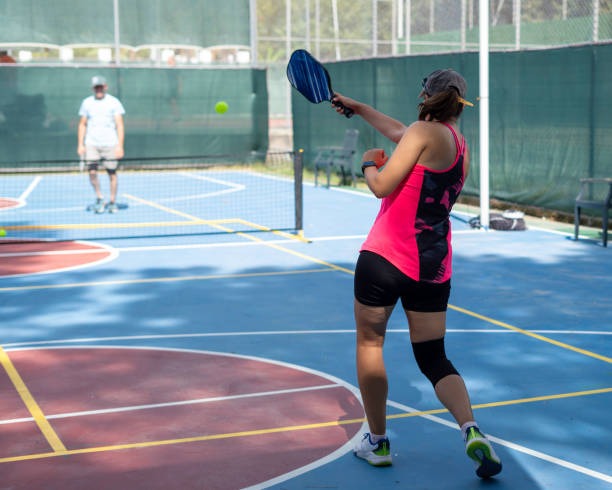
The ultimate solution: quality + cushioning = salvation.
If you want to continue enjoying pickleball and no longer suffer from elbow pain, then you need to meet the following three key points when choosing your paddle:
- Medium-weight paddles (7.8 – 8.2 oz): The “ballast” against impacts.
Explanation: Sufficient paddle mass is the “ballast” against the kinetic energy of the incoming ball. A medium-weight paddle, ranging from 7.8 to 8.2 ounces, provides enough inertia to effectively absorb and disperse the impact of the shot, significantly reducing the vibration transmitted to the arm.
Personal experience: In my testing, after switching from a light paddle to a medium-weight paddle, I found that the stability of my shots was greatly improved and the burden on my arm was significantly reduced. Especially when making powerful smashes or fast volleys, the “shaking” sensation almost disappeared.
- Thick polymer honeycomb core (16 mm+): Your personalized “airbag”
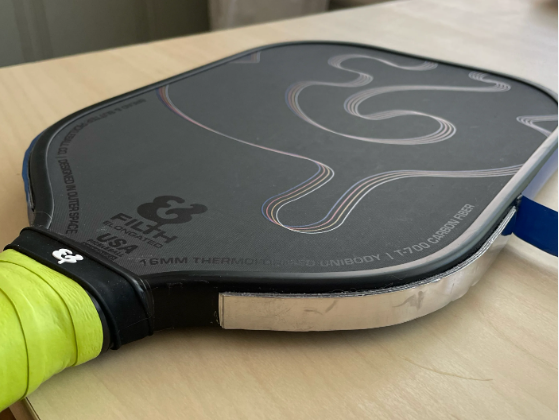
Explanation: The polymer honeycomb core is the paddle’s “shock absorption system.” The thicker the core (ideally 16 mm or more), the better the cushioning and shock absorption provided by its internal structure. It significantly extends dwell time, allowing the ball to stay on the paddle face longer, thus softening the feel of the shot and dispersing the impact.
Hard-coded fact: Polymer honeycomb cores typically offer a softer feel, greater inclusion, and help improve “elasticity,” increasing power on the shot without sacrificing control, making them the core of a paddle that protects the hand.
- Carbon fiber surface: An “armor” that uniformly distributes energy.
Explanation: The surface of a carbon fiber paddle not only provides superior control and feel, but its rigidity and uniformity also help distribute the energy of a shot more widely across the entire paddle face, rather than concentrating it in one point. This further reduces localized impact and provides better protection for the tendons.
Bonus points: Professional vibration suppression technology
Explanation: Some leading brands have invested heavily in research and development of shock absorption technology. For example, Pro Kennex’s Kinetic Technology and Engage’s “Multi-Vibration Damping” technology both use patented designs to actively absorb and eliminate harmful vibrations generated at the moment of impact, providing extra protection for the elbows.
Comparison of key features of Pickleball paddles with hand protection
|
Feature |
Hand-protecting paddle (recommended) |
Paddles that are prone to hand injuries (avoid) |
Impact on elbow |
|
Weight |
Medium weight (7.8 – 8.2 oz) |
Lightweight (< 7.5 oz) or heavyweight (> 8.5 oz) |
Medium weight effectively absorbs shock; too light and it transmits vibration, too heavy and it increases the burden. |
|
Core thickness | Thick polymer honeycomb core (16 mm+) |
Thin core (< 14mm) or hard core (wood/aluminum) |
A thick core provides cushioning and extends dwell time; a thin core experiences violent impacts and greater vibrations. |
|
Surface material |
Carbon fiber |
Fiberglass or inexpensive composite materials |
Carbon fiber distributes energy evenly and has good control; glass fiber has great strength but may vibrate. |
|
Vibration reduction technology |
Pro Kennex Kinetic, Engage Damping |
No specific damping technology |
Effectively absorbs and eliminates residual vibration, significantly protecting the elbow. |
Debunking the myth: Prices are unrelated to protection.
Remember this golden rule for pickleball paddles: price doesn’t necessarily reflect its health protection. A high price doesn’t equal injury prevention. Players should choose paddles based on their playing style and physical condition, especially their elbow protection needs, not just price. Finding a paddle with the right characteristics and hand protection for your technique is the most important thing.
Conclusion and Action: Protect your athletic career, starting with choosing the right paddle.
Your health is far more important than your “hand speed” or “smash power.” Nothing shortens your athletic career or prevents you from enjoying the sport you love more than an injury.
Don’t let tennis elbow stop you from playing pickleball. It’s time to make a smart choice. Ready to say goodbye to pain and enjoy painless pickleball? Explore our 16mm medium-weight paddle series designed with elbow protection, and start your “painless pickleball” journey today!

About Jason Simmons
Jason S. Simmons has been obsessively dissecting racket sports equipment for over a decade. After transitioning from competitive tennis to Pickleball in 2020, Jason realized the market was flooded with confusing marketing jargon and overpriced gear.
His Mission: To help players—especially seniors and those recovering from Lateral Epicondylitis (Tennis Elbow)—find the perfect paddle setup that balances power, control, and health.
Why Trust Jason?
- Material Science Geek: He doesn't just play; he analyzes. From the weave patterns of Toray T700 Raw Carbon Fiber to the density of Polypropylene Honeycomb Cores, Jason understands the physics behind the "pop."
- Data-Driven Testing: Jason has play-tested over 50+ models, evaluating them on Swing Weight, Twist Weight, and Dwell Time rather than just subjective "feel."
- On the Court: Based in the US, Jason actively competes in regional 4.5+ level leagues. When he isn't drilling his third-shot drops, he is likely inspecting paddles for Core Crushing or Delamination issues.
Jason believes that "A dead paddle kills your game," and is dedicated to teaching players how to maintain their grit surface for peak performance.
View all posts by Jason Simmons