Stop haphazardly adding lead decals! Why your “personalized modifications” are actually ruining your race.
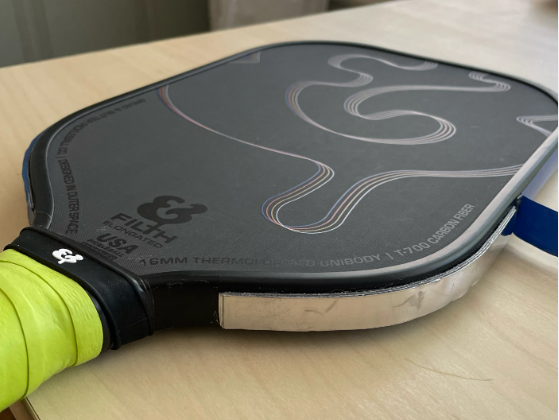
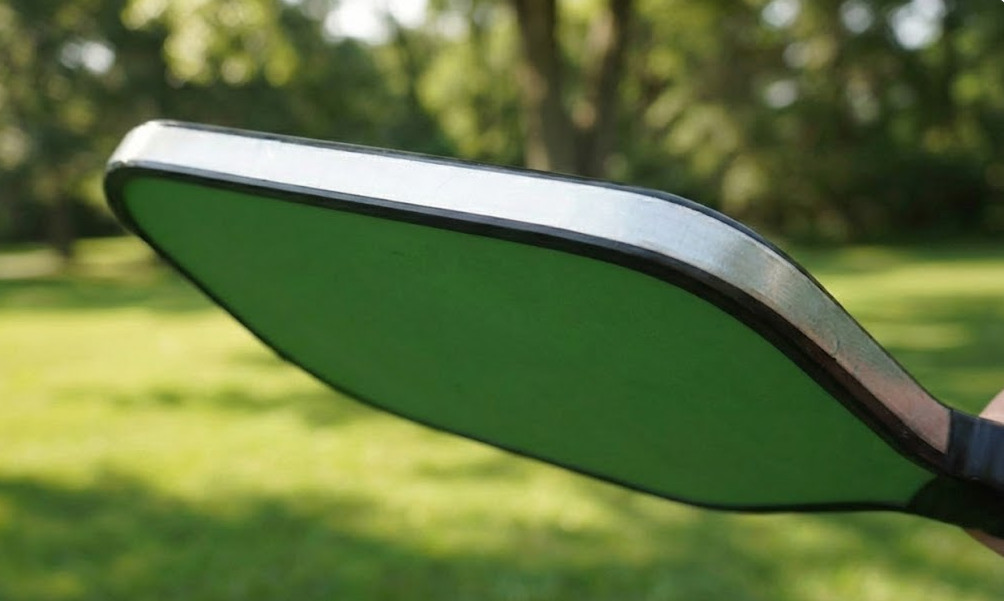
On the pickleball courts, you might often see players with shiny silver tape wrapped around the edges of their paddles—lead tape. They might look very professional, as if they’re doing some kind of high-tech “personalization.” However, as an expert with a deep understanding of pickleball equipment, I must warn you: behind this “Frankenstein” paddle craze lies a huge risk.
Professional players using lead tape are usually supported by professional teams of strength and conditioning coaches and physiotherapists; their wrists and bodies undergo special training. If you blindly imitate this and try to “upgrade” your paddle by arbitrarily adding lead tape, you’re likely to end up with not a high-performance custom paddle, but a monstrous paddle that’s incredibly heavy, poorly balanced, and could even cause you injury.
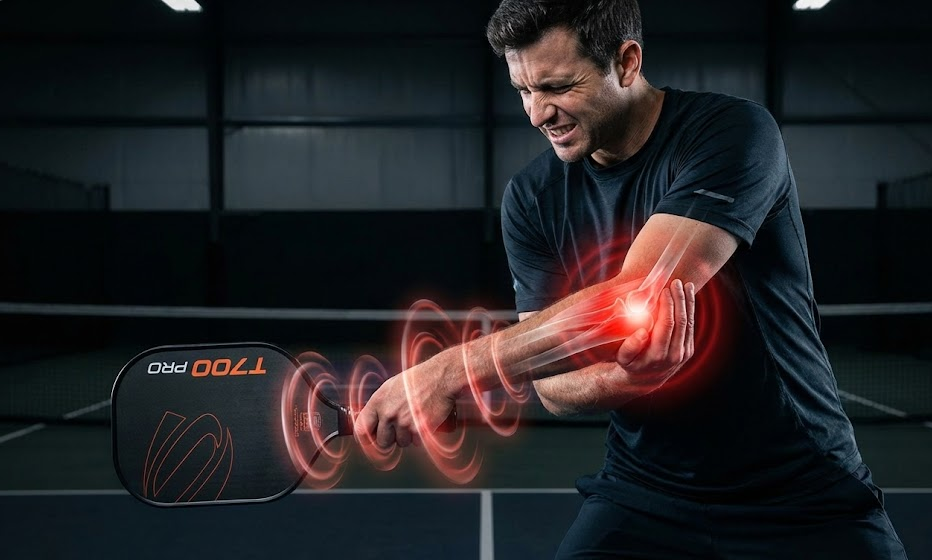
In my testing, I’ve seen far too many players suffer from slower hand speed, unstable ball control, and even tennis elbow due to incorrect lead tape placement. Today, I’ll reveal the physics behind lead tape, helping you avoid common pitfalls and truly master the secrets of “professional” paddle adjustment.
Static weight vs. Swing weight: The physics behind lead tape
First, let’s review some basic physics. Static weight, as the name suggests, is the actual weight you feel when you put the paddle on a scale. Swing weight, on the other hand, is the weight you feel when you swing the paddle. It depends not only on the static weight but more importantly on the distribution of that weight.
Remember this golden rule: the further the lead tape is from the handle, the more quadratic the effect on swing weight. Simply put, adding just 3 grams of lead tape to the paddle head can increase swing weight by 10 units, significantly reducing your swing speed and making you half a beat slower in crucial moments. It’s like holding a hammer; swinging it by the handle is easy, but if you grip the hammerhead, it feels incredibly heavy, even though the total weight of the hammer remains the same. The placement of the lead tape utilizes this leverage principle.
Trap 1: The Deadly “12 o’clock” Position
One of the most common mistakes is attaching the lead tape directly to the very top of the paddle, at the 12 o’clock position. Many players believe that doing so will maximize the power of their smashes, giving the shot a more “hammer-like” feel.
However, the cost of this approach is enormous. Your hand speed becomes abnormally sluggish, and you’ll completely lose your advantage in fast rallies and volleys at the net. Balls that would have been easy to hit now always seem a beat too late. More importantly, this extreme weight distribution generates tremendous leverage torque, putting immense strain on your wrists and elbows. This isn’t a shortcut to “power,” but a direct route to pickleball elbow. I’ve personally tested this setup; after just a few minutes of high-intensity hitting, my elbows felt noticeably strained.
Trap 2: The Dangers of Left-Right Asymmetry
Another common mistake is haphazardly attaching the lead tape or having asymmetrical weight and placement on both sides. This causes the paddle’s center of gravity to shift, making the paddle face more prone to automatic rotation upon impact, severely impacting control accuracy and stability. Your shots become unpredictable, significantly increasing your error rate.
The secret to expanding the sweet spot: the professional “4 o’clock and 8 o’clock” positions.
So how do professional pickleball players utilize lead tape? Their secret lies in increasing torsional weight, rather than simply increasing swing weight. The most recommended placement of the lead tape is on the lower sides of the paddle, approximately at the 4 o’clock and 8 o’clock positions, close to the throat.
This placement significantly increases the paddle’s lateral inertia. This means that when the ball doesn’t hit the sweet spot precisely but instead strikes the edge of the paddle face, the paddle is less likely to twist. The paddle’s stability is greatly improved, making your shots more solid.
By increasing torsional weight, you effectively expand the sweet spot’s effective range. Even off-center shots maintain relatively stable power and direction, reducing errors. Most importantly, this placement has less impact on swing weight, effectively protecting your hands and elbows and keeping you away from injuries. In my experience, this is a wise choice that balances performance improvement with athletic health.
Do you really need lead tape?
Now, let’s get back to a core question: Do you really need lead tape? As a pickleball equipment expert, my answer is most amateur players don’t need lead tape for modifications at all.
Top-of-the-line Pickleball paddles, such as ours, are meticulously formulated at the factory, achieving the golden balance of 7.8-8.2 ounces. They are designed to provide optimal control, power, and feel without requiring any modifications. For example, the polymer honeycomb core offers a softer, more inclusive feel, helping to enhance “elasticity” and increase power on the shot without sacrificing control. Swing weight is key to the paddle’s feel; a heavier swing weight provides more power, while a lighter swing weight facilitates faster reaction and better control. These factors are fully considered when our paddles leave the factory.
My advice is to use the original factory settings for at least 3 months. Fully experience the paddle’s raw performance. If, after that, you still clearly feel the paddle is “floaty” or lacks stability when hitting shots outside the sweet spot, then consider making minor adjustments at the 4/8 o’clock position. Remember, the lead tape is for fine-tuning, not for covering up inherent flaws in the paddle itself.
Summary and Recommendations
In short, lead tape is not magic; it is simply an advanced fine-tuning tool. Don’t sacrifice your speed and athletic health for the sake of blindly pursuing so-called “power.” Correct knowledge and careful practice are the keys to truly improving your match performance.
Want a paddle that’s perfectly balanced right out of the box, with a large sweet spot that lets you focus on the game rather than your equipment? Check out our [Midweight Balanced Series] and find the perfect one tailored for you!

About Jason Simmons
Jason S. Simmons has been obsessively dissecting racket sports equipment for over a decade. After transitioning from competitive tennis to Pickleball in 2020, Jason realized the market was flooded with confusing marketing jargon and overpriced gear.
His Mission: To help players—especially seniors and those recovering from Lateral Epicondylitis (Tennis Elbow)—find the perfect paddle setup that balances power, control, and health.
Why Trust Jason?
- Material Science Geek: He doesn't just play; he analyzes. From the weave patterns of Toray T700 Raw Carbon Fiber to the density of Polypropylene Honeycomb Cores, Jason understands the physics behind the "pop."
- Data-Driven Testing: Jason has play-tested over 50+ models, evaluating them on Swing Weight, Twist Weight, and Dwell Time rather than just subjective "feel."
- On the Court: Based in the US, Jason actively competes in regional 4.5+ level leagues. When he isn't drilling his third-shot drops, he is likely inspecting paddles for Core Crushing or Delamination issues.
Jason believes that "A dead paddle kills your game," and is dedicated to teaching players how to maintain their grit surface for peak performance.
View all posts by Jason Simmons