What is Swing Weight? Why are advanced pickleball players discussing this Paddle parameter so much?
Hey fellow pickleball players! Have you noticed that lately, when people are talking about pickleball paddles , besides weight and materials, there’s a new term – Swing Weight ? For us players who are eager to improve our skills and carefully select our equipment that meets USA Pickleball standards, this parameter might sound a bit technical, but believe me, it’s absolutely crucial in determining the feel of your racket and your performance on the court.
As a seasoned pickleball equipment enthusiast and tester, I know all too well the confusion when choosing a racket. With so many rackets on the market and a mountain of specifications, which one is truly the best fit for you? Today, we’ll discuss Swing Weight , the “secret weapon” of advanced players, to help you unravel the mysteries of rackets.
I remember being completely clueless when I first heard about Swing Weight. I thought rackets were just about total weight and balance point, right? It wasn’t until I personally tested several rackets with significant differences in Swing Weight that I truly understood its enormous impact on feel and shot quality. That shift from “knowing” to “feeling” it was truly an eye-opener.
Table of Contents
I. In-depth analysis of Swing Weight: More than just numbers, it’s the key to feel and performance.
What is Swing Weight?
Simply put, swing weight measures the “inertia” or “resistance” you feel when swinging a racket. It’s not simply about the racket’s total weight, nor is it just about the balance point. A racket may be lightweight overall, but if its weight is mainly distributed in the head, its swing weight will be relatively high, making it feel “heavy” or “substantial” when you swing it. Conversely, if the weight is more concentrated near the grip, even with the same total weight, the swing weight will be lower, making it feel “light” and “flexible” when you swing it.
- How is it measured? Swing Weight is a dynamic measurement that reflects the racket’s ability to resist spin during a swing. It takes into account both the racket’s total weight and its distribution across the racket.
- The difference between “static weight” and “balance point”.
- Static weight : This is the total weight of the racket when it is placed on a scale.
- Balance Point : Measures the position of the racket’s center of gravity, whether it is biased towards the head (head-heavy) or towards the grip (head-light).
- Swing Weight : This is the most direct feeling you get during the actual swing. It reflects the “weight” of the racket more accurately than static weight and balance point.
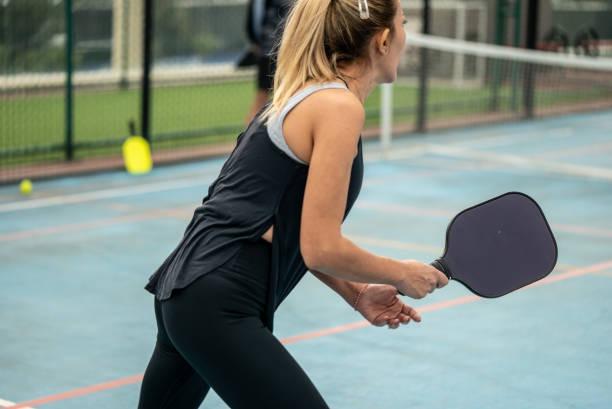
The direct impact of swing weight on hitting performance
Now that we understand Swing Weight, let’s see how it actually affects your performance on the court.
High Swing Weight: Power & Stability
- Suitable playing style : If you are the type of player who likes to hit powerful shots from the baseline, pursues depth and power in your shots, or needs greater stability to deal with your opponent’s heavy shots, a high swing weight racket may be more suitable for you.
- Advantages :
- Greater hitting power : The greater inertia during the swing allows more energy to be transferred to the ball, resulting in a more penetrating shot.
- Reduced vibration : At the moment of impact, the racket is more stable, which can effectively reduce the feeling of vibration in the hand.
- Increases ball penetration : Especially suitable for playing in the wind or when you need to press the ball deep to the baseline.
- Disadvantages :
- Slow swing speed : requires more power to accelerate, and reaction time may be shorter.
- Short reaction time : In fast-paced net play, you may feel like you “don’t have time” to adjust.
- Wrist fatigue : Prolonged use may put greater strain on the wrists and arms.
Low Swing Weight: Speed & Control
- Suitable playing style : If you are a technical player who excels at net play, quick reactions, and precise placement, or if you focus on defense and long rallies, a low-swing weight racket will suit you perfectly.
- Advantages :
- Fast swing speed : It’s easier to accelerate, allowing you to quickly adjust your posture during rapid back-and-forth swings.
- Better controllability : Precisely control the angle and landing point of the shot, enabling more refined tactics.
- Reduce arm strain : It helps prevent fatigue during long matches, keeping you flexible.
- Disadvantages :
- The hitting power is relatively weak : more force is needed to hit a penetrating ball.
- It may be unstable when facing heavy balls : the racket may feel “stuck” when facing a powerful shot from the opponent.
In my racket testing, I used a high-swing-weight racket to hit the baseline, and the ball felt deep and heavy, with tremendous pressure. However, when moving to the net to handle fast volleys and backhand blocks, I clearly felt my swing was a beat slower, and I couldn’t keep up with the rhythm. After switching to a low-swing-weight racket, the feel at the net improved a lot, but when hitting powerful shots from the baseline, it felt less “pressureful.” This made me realize that there is no best swing weight, only the swing weight that best suits you.
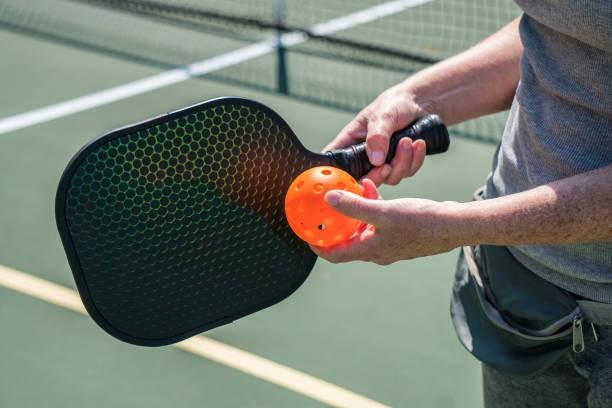
II. Why are advanced players discussing Swing Weight?
For advanced players, choosing a racket is no longer just about “being able to use it,” but about achieving refined tuning and pursuing the ultimate feel to match their specific tactical needs.
- Refined tuning : Advanced players are extremely sensitive to the feedback from every shot. They will find the swing weight that maximizes their strengths based on their power, speed, reaction time, and main playing style.
- Adaptability and Fatigue Management : Fatigue is inevitable during long competitions and training sessions. A suitable swing weight can help them find the optimal balance between power output and physical exertion, maintaining a high level of performance while effectively managing the body’s burden.
Matching different playing styles with Swing Weight
| Playstyle | Core features | Recommended Swing Weight Range | Recommended racket features |
| Power type player | He enjoys powerful smashes and baseline rallies, seeking depth and speed in his shots. | higher | It is relatively heavy, with a slightly heavy head and moderate thickness, providing maximum power output and stability. |
| Control Players | He excels at net play, precise placement, and long rallies, emphasizing feel and landing point. | lower | Lighter, with a balance point centered or slightly off-center on the grip, and thinner, it is easy to swing quickly and control precisely. |
| All-rounder | It is good at both offense and defense, can adapt to different tactics, and strives for balance. | medium | Its moderate weight and balance point provide a good balance of power and control. |
More than just Swing Weight: the synergistic effect of other core parameters
Of course, Swing Weight is only one important parameter in racket selection. An excellent racket is the result of the combined effect of many parameters.For a comprehensive breakdown of how these specs work together, refer to our [2026 Pickleball Paddle Ultimate Buying Guide].
- Core Thickness: Sweet Spot & Pop
- The core thickness of a racket directly affects the size of its sweet spot and the bounce (pop) when hitting the ball .
- Thicker rackets typically have a larger sweet spot, offering greater tolerance for errors and making them more suitable for beginners or players seeking consistency.
- The polymer honeycomb core provides a softer feel and excellent elasticity, which helps to enhance “elasticity” and increase the power of the shot without sacrificing control.
- Racket materials: carbon fiber, fiberglass, polymer.
- Carbon fiber rackets : offer superior control and feel , suitable for advanced players or those who prioritize skill and accuracy.
- Fiberglass rackets : More suitable for power-based playing styles , often used by beginners or players who prefer an aggressive style, providing greater flexibility.
- Polymer core : Provides a softer feel, suitable for mid-range rackets that prioritize control. [Image: Paddle material comparison chart showing carbon fiber, fiberglass, polymer cores and surfaces] Image: A comparison of the materials used in a Pickleball racket. It showcases the structure and properties of carbon fiber, glass fiber surfaces, and polymer cores.
- Grip Size: Handling and Comfort
- The grip size must be matched to the player’s hand shape. A grip that is too large will affect control and wrist flexibility, while a grip that is too small may lead to excessive wrist pressure and grip strength. Choosing the right grip size can significantly improve comfort and control.
- Surface Texture: Rotational Capability
- The surface texture of the racket (such as a matte or rough coating) helps to increase the friction between the racket and the ball, thereby increasing spin and making your slices and topspin shots more threatening.
- Edge Guard : It is key to the durability of a racket, especially in outdoor matches, and effectively protects the edge of the racket from impacts.
III. How to Choose the Right Swing Weight for You? — My Expert Advice
Choosing a racket is a very personal process; there is no absolutely “best” choice, only the one that is most suitable for you.
- Define your playing style and needs : Do you value power and dominance more, or do you prioritize finesse control and quick reactions? Are you a baseline attacker or a volley specialist at the net? Clarifying these aspects will help you narrow down your choices.
- Try them out yourself : If possible, be sure to try out several rackets with different swing weights. Only through actual swinging and hitting can you truly feel the difference. Remember, price doesn’t necessarily reflect quality . Players should choose rackets based on their personal playing style, not just on price.
- Don’t be afraid to experiment : In my experience, even a small adjustment, whether it’s swing weight or grip size, can make a huge difference to your game. Often, we’re used to our rackets, but they might not be the best fit for us. Be brave and try new configurations; you might discover a whole new world.
- Balanced considerations : Take into account Swing Weight, core thickness, racket material, and grip size. A good racket is the result of these parameters working together. For example, if you like the power of a high Swing Weight but are worried about a slow swing speed, you can consider choosing a thinner core to balance the feel.
Ready to find the perfect racket for you? Check out our detailed Pickleball padding buying guide , which includes in-depth analysis of racket materials and techniques, as well as a list of rackets recommended for different playing styles.
Further Reading:
[Equipment & Technology: In-depth understanding of Pickleball racket materials, choosing the right “weapon” for you]
[Selection and Comparison Guide: Best Pickleball Rackets of 2026 – Recommended to Match Your Playing Style]
IV. Summary: Swing Weights – A Bridge from Parameters to Victory
Understanding Swing Weight and its impact on your performance is a crucial step in improving your pickleball skills. It’s more than just a technical parameter; it’s a bridge between you and your racket, allowing you to more accurately select and adjust your equipment to perform at your best on the court.
Choose the right equipment for you, enjoy the fun of pickleball, and swing with confidence every time! Hopefully, today’s sharing will help you better understand this “secret of advanced players” and give you more confidence when choosing a racket. See you on the court!

About Jason Simmons
Jason S. Simmons has been obsessively dissecting racket sports equipment for over a decade. After transitioning from competitive tennis to Pickleball in 2020, Jason realized the market was flooded with confusing marketing jargon and overpriced gear.
His Mission: To help players—especially seniors and those recovering from Lateral Epicondylitis (Tennis Elbow)—find the perfect paddle setup that balances power, control, and health.
Why Trust Jason?
- Material Science Geek: He doesn't just play; he analyzes. From the weave patterns of Toray T700 Raw Carbon Fiber to the density of Polypropylene Honeycomb Cores, Jason understands the physics behind the "pop."
- Data-Driven Testing: Jason has play-tested over 50+ models, evaluating them on Swing Weight, Twist Weight, and Dwell Time rather than just subjective "feel."
- On the Court: Based in the US, Jason actively competes in regional 4.5+ level leagues. When he isn't drilling his third-shot drops, he is likely inspecting paddles for Core Crushing or Delamination issues.
Jason believes that "A dead paddle kills your game," and is dedicated to teaching players how to maintain their grit surface for peak performance.
View all posts by Jason Simmons