Pickleball Paddles Technology Comprehensive Analysis: A Hardcore Knowledge System from Materials to Structure
Quick Navigation
I. Opening Remarks: Pickleball Paddles are more than just rackets; they are the culmination of technology and art.
Hey everyone, hardcore pickleball players and tech enthusiasts! It’s great to be here with you, like an old friend, to talk about the core “weapon” of our sport— the pickleball paddle.
You might think a racket is just a blade with a handle, right? But if you dig deeper, you’ll find it’s much more than that.
Every pickleball paddle is a perfect combination of materials science, structural mechanics, and ergonomics—a fusion of technology and art.
Today, we’re not going to give you a superficial overview, but rather take you beyond the surface and delve into the “cutting-edge technology” of Pickleball Paddles. Our goal is to help you build a complete, systematic, and in-depth understanding of racket technology.
Why is it so important to understand the technology behind Pickleball Paddles ? It’s simple:
Improve your performance : Understanding technology can help you choose the racket that best suits your playing style and physical condition.
Make smarter purchasing decisions : Faced with a dazzling array of Pickleball Paddles on the market , you will be able to see through the marketing jargon to understand their true value.
Better maintain your “comrade-in-arms” : Understanding material properties can help extend the lifespan of your racket.
Ready? Let’s embark on an in-depth exploration of Pickleball Paddles !
II. Pickleball Paddles Core: The Mysteries of Materials (In-depth Analysis of Different Materials)
The material of a racket is the cornerstone of its performance. Different materials give rackets different “personalities”—power, control, shock absorption, feel, and even noise. We will analyze each component one by one, from the racket’s “heart”—the core —to the “skin” that comes into direct contact with the ball —the racket face , and then to edge protection and the handle.
2.1 Core Material: The “heart” of the Pickleball Paddles
The core is the honeycomb structure inside the racket. It is responsible for absorbing the energy of the shot, providing shock absorption, and has a decisive influence on the racket’s power output, control, feel, and noise.
Polymer honeycomb
Composition: The most mainstream racket core material currently on the market is mainly composed of polypropylene (PP). This material is known for its excellent energy absorption and shock absorption properties.
Characteristic:
- Shock absorption: PP material can effectively absorb the impact force when hitting the ball, reduce the vibration transmitted to the arm, bring a more comfortable hitting feel, and help avoid sports injuries.
- Control: Due to its relatively soft properties, the polymer core allows the ball to stay on the racket face for a slightly longer time, thus providing better control and spin potential.
- Noise: Compared to other materials, polymer cores generally produce less noise when hitting the ball, making them “quieter” and more popular in some noise-sensitive venues.
- Power: While not as directly explosive as Nomex, modern polymer cores can still deliver considerable power output by optimizing thickness and density.
Common thicknesses and densities:
| Core Type | Thickness | Characteristics |
| Thin Core | Approx. 10-13mm | Typically provides more direct impact feedback and higher power, but with slightly weaker shock absorption. |
| Thick Core | Approx. 14-19mm | Provides superior shock absorption, a larger sweet spot, and a longer racket dwell time, thereby enhancing control and “soft” hand performance, and is the current mainstream trend. |
Small honeycomb vs. large honeycomb: Honeycomb size affects the density and stiffness of the racket core.
- Smaller honeycombs are generally denser, providing a more solid feel and better power.
- Larger honeycombs are lighter and more flexible, potentially offering advantages in control and shock absorption.
In summary, polymer honeycomb represents a balance, is suitable for the vast majority of players, and is also a major direction for future technological development.
Nomex Honeycomb
Composition: Made of aramid fiber paper, a material also used in the aerospace field.
Characteristic:
- Stiffness and power: Nomex cores are known for their extremely high stiffness and rigidity, which can efficiently bounce the energy of the shot, providing a very direct and explosive power output.
- Crispness: The feedback when hitting the ball is very crisp, which some players who like a “hard feel” will love.
- High noise: This is a notable feature of Nomex rackets, with the sound of the ball hitting the racket often being much louder than that of polymer core rackets, sometimes even described as “noisy,” which may be a limitation in some communities or indoor venues.
Target Audience: Suitable for players who seek ultimate power, enjoy a crisp feel when hitting the ball, and are not sensitive to noise. Gradual decline: Nomex drum cores are gradually losing market share due to their noise issues and relatively poor shock absorption.
Aluminum honeycomb
Composition: As the name suggests, it is made of aluminum.
Characteristic:
- Lightweight and Power: It was once popular due to its lightweight design and good power output.
- Stiffness: The feeling of hitting the ball is usually stiff, and the shock absorption effect is average.
Reasons for gradual elimination: Similar to Nomex, aluminum honeycomb also produces a lot of noise when hitting the ball, and it is not as durable as polymer, and is easily deformed or damaged by impact. Therefore, it has been basically eliminated from the market.
Understanding the characteristics of the racket core is the first step in understanding racket performance.
Summary: The Philosophy of “Sound” and “Feel” in Different Reins
- If you prioritize comfort, control, and relative quiet, polymer is the perfect choice.
- If you crave ultimate power and a crisp sound when hitting the ball, and don’t mind the noise, you can try Nomex (but it’s less common on the market now).
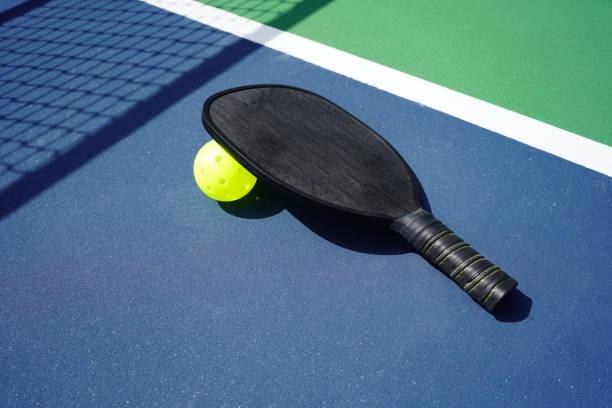
2.2 Racket Face (Surface) Material: The material that makes the first intimate contact with the ball.
The racket face is the part of the racket that directly contacts the pickleball, and it determines the racket’s spin potential, ball control feel, power transfer, and durability.
Carbon fiber
Features : This is the mainstream racket face material for high-end pickleball paddles and is also the core of technological innovation.
High strength and lightweight: Carbon fiber is known for its excellent strength-to-weight ratio, providing a strong and durable racket face while keeping the racket lightweight.
Excellent ball control and spin potential: Carbon fiber racket faces typically provide longer ball dwell time and better friction, thus giving players excellent ball control and the potential to generate spin.
Durable: Excellent impact and abrasion resistance.
The impact of different weaving methods (12K, 3K, T700, etc.) on performance:
- The “K” value refers to the number of single filaments in each bundle of carbon fiber. For example, 3K means there are 3,000 filaments per bundle, and 12K means there are 12,000 filaments per bundle. Generally, the lower the K value, the finer the carbon fiber, which may result in a more delicate feel for the woven racket surface, but also a higher cost.
- T700, T800, etc.: These are carbon fiber grades, representing the strength and modulus (rigidity) of the carbon fiber. T700 is a commonly used high-performance carbon fiber in the industry, while T800 and higher grades offer superior strength and rigidity, resulting in a more solid and powerful hitting experience, and are typically used in high-end racket faces.
- Texture: The weave texture (such as plain weave or twill weave) also affects the friction and appearance of the racket face.
Thermoformed/Forged Carbon Fiber: This is one of the hottest cutting-edge technologies in the Pickleball Paddles field in recent years.
- Principle: The carbon fiber racket face and core are molded together under high temperature and pressure. The carbon fiber material is usually extended to the edge of the racket to form an “edge wrap” or “integrated edge”.
- Advantages:
- Edge strength: Significantly improves the structural integrity and durability of the racket edges, reducing the risk of edge breakage.
- Overall rigidity: Through one-piece molding, the overall rigidity of the racket is significantly improved, reducing energy loss during impact.
- Expanded sweet spot: Due to the reinforcement of the edges and the improvement of overall rigidity, the effective hitting area (sweet spot) of the racket is expanded, allowing for better power and control even when hitting off-center.
- Power and Spin: Greater structural rigidity means more efficient energy transfer during impact, resulting in greater power output and spin potential.
- Challenges: High manufacturing costs and stringent process requirements.
In summary, carbon fiber is synonymous with performance and innovation, especially thermoforming technology, which is redefining the standards for high-end pickleball paddles .
Fiberglass
Characteristic:
- Elasticity and power output: Fiberglass racket faces are generally more elastic than carbon fiber, which allows them to provide greater power output when hitting the ball, as if there is a “slingshot effect”.
- Cost-effectiveness: Compared to carbon fiber, glass fiber is less expensive, making glass fiber pickleball paddles more affordable and a popular choice for many entry-level and intermediate rackets.
- Feel and spin performance: The feel is generally “softer,” and the sound upon impact may be more muffled. In terms of spin manufacturing, traditional fiberglass racket faces are not as good as carbon fiber, but some modern fiberglass racket faces also use textured treatments to improve friction.
In summary, fiberglass is an ideal choice for power players and those on a budget.
Graphite
Characteristic:
- Lightweight and stiff: Graphite surfaces are generally lighter and stiffer than fiberglass surfaces.
- Ball control and touch: It provides excellent ball control and touch, allowing players to have a more precise grasp of the ball’s landing point.
The difference between graphite and carbon fiber: In the world of pickleball, graphite and carbon fiber are often used interchangeably or misused. Strictly speaking, carbon fiber is a composite material reinforced with specially treated graphite fibers. However, when “graphite” is mentioned in a racket description, it usually refers to a lightweight, moderately stiff racket face material, somewhere between glass fiber and high-performance carbon fiber. It may not have the extreme power and spin potential of top-tier carbon fiber, but it offers very balanced performance.
In summary, graphite racket faces are a good choice for well-rounded players, offering good control and lightweight design.
Hybrid Surfaces
Composition: Some pickleball paddles cleverly combine the advantages of different materials, such as a blend of carbon fiber and glass fiber.
Objective: To achieve a specific performance balance, such as the control and spin of carbon fiber combined with the elasticity and strength of glass fiber. Through layered or mixed weaving, designers can fine-tune a unique feel when hitting the ball.
Surface Texture
Importance: Roughness, graininess, and friction coating of the racket face are crucial to the spin of the pickleball.
Principle: A rough surface increases the friction when the ball contacts the racket face, making it easier to apply spin to the ball when hitting it.
Common procedures:
- Sandblasting: Increases surface roughness through physical grinding.
- UV Coating: Adding a textured coating to the racket surface.
- Etched/Textured: A texture is formed directly on the surface of the material.
USAPA Rules: To ensure fair play, the USAPA, the official governing body of Pickleball, imposes strict restrictions on the roughness of the racket surface. The racket face cannot be too rough to prevent the creation of “cheating” spin effects. Players should ensure that their Pickleball Paddles comply with USAPA regulations when choosing them; otherwise, they may not be usable in official matches.
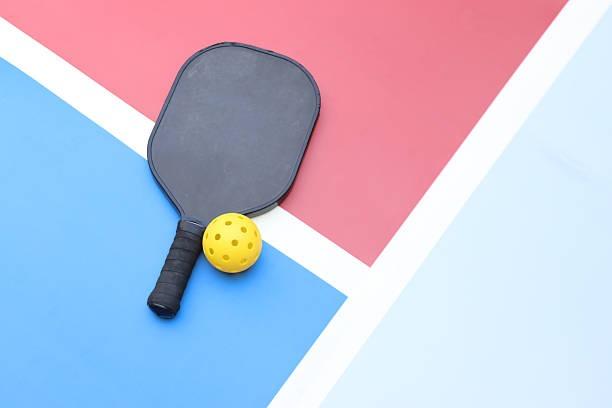
2.3 Edge Guard and Handle Materials
Although these details do not directly contact the ball, they are equally important to the racket’s durability, balance point, and overall feel.
Edge Guard:
- Function: Primarily used to protect the edge of the racket from damage when it hits the ground or net post.
- Materials: Usually plastic, but some high-end rackets use carbon fiber reinforced edges for stronger protection and a more integrated structure (such as thermoforming technology).
- Impact on balance point: The weight and material of the edge protection will slightly affect the balance point of the racket; heavier edge protection may make the racket feel slightly head-heavy.
Handle:
- Internal structure: Usually made of materials such as wood, foam filling or carbon fiber.
- Wood: Traditional and inexpensive, but its shock absorption effect is generally average.
- Foam filling: Provides some shock absorption and comfort.
- Carbon fiber: mostly used in high-end rackets, it can enhance the structural strength and shock absorption performance of the handle, and create a more unified feedback with the racket body.
Grip: The outside of the handle is usually wrapped with grip leather made of synthetic material, which provides anti-slip, sweat-wicking, and comfortable feel. Different grip leather thicknesses and materials will also affect the grip and shock absorption.
III. Structural Design: The “Skeleton” and “Muscles” of Pickleball Paddles
If the material is the “DNA” of a racket, then the structural design is the racket’s “skeleton” and “muscles,” determining the racket’s overall shape, weight distribution, and dynamic performance during actual swings.
3.1 Paddle Shape: The Balance of Power, Control, and Sweetness
The design of the racket’s external profile has a significant impact on the range of impact, sweet spot size, and aerodynamic characteristics.
| Shape | Features | Advantages | Disadvantages |
| Standard / Traditional | Rectangular or elliptical, moderate L/W ratio. | Offers balanced performance, balancing power, control, and sweet spot size. Good starting choice. | N/A |
| Elongated | Significantly longer and relatively narrower. | Longer reach: Ideal for serves/returns. Greater power: Longer swing path produces faster head speed. | Small sweet spot requiring high accuracy. Swing weight may be slightly greater. |
| Wide Body | Relatively wide and relatively short. | Larger sweet spot: Better forgiveness. Easier to defend: Provides a larger “shield”. | Shorter reach and potentially slightly less power output compared to the extended version. |
| Hybrid | Combines characteristics (e.g., slightly longer but also wide). | Designed to balance multiple performance aspects, providing range while ensuring good sweet spot. | N/A |
Racket head aerodynamic design: Some rackets feature a streamlined design at the edge of the head to reduce air resistance and increase swing speed. While the effect may not be as significant, it’s a detail worth considering for players seeking ultimate performance.
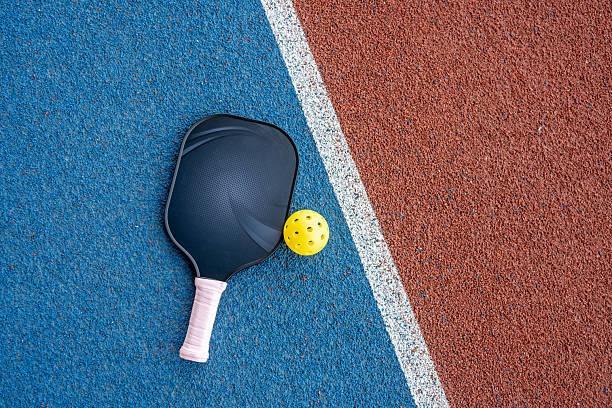
3.2 Weight & Balance: The Art of Swing Speed and Stability
The weight and distribution of a racket are key factors affecting swing speed, hitting power, control, stability, and fatigue.
Static Weight:
Definition: Refers to the total weight of a racket, usually measured in ounces (oz) or grams (g).
- Lightweight rackets (approx. 7.3-7.8 oz)
- Advantages: Fast swing speed, sensitive reaction, suitable for fast volleys and net shots, reducing arm fatigue.
- Disadvantages: The hitting power may be relatively weak, the stability is relatively poor, and it is easy to be hit by heavy balls.
- Medium-weight rackets (approximately 7.9-8.3 oz)
- Advantages: Offers a good balance of power and control, suitable for most all-around players.
- Heavyweight rackets (approximately 8.4 oz and above)
- Advantages: Powerful shots, excellent stability, effectively absorbs the impact of incoming balls, suitable for baseline power players.
- Disadvantages: The swing speed is relatively slow, which can easily cause arm fatigue and is not suitable for long-term rapid reaction.
Swingweight:
Definition: Swing weight is a measure of how heavy a racket “feels” when actually swung. It takes into account not only the total weight but also the weight distribution across the racket. A light but head-heavy pickleball paddle may have a greater swing weight than a heavy but balanced racket.
- High swing weight: Feels heavier, provides greater power and stability, but swing speed is slower, reaction is sluggish, and fatigue is more likely.
- Low swing weight: feels lighter, swings faster, and reacts more quickly, but has relatively weaker power and stability.
Importance: For hardcore players, swing weight is a better indicator of a racket’s dynamic performance than static weight.
Balance Point:
Definition: Refers to the position of the racket’s center of gravity, usually measured from the bottom of the handle.
- Head-heavy: The center of gravity is biased towards the head when hitting the ball.
- Advantages: Increases hitting power, especially suitable for powerful serves and baseline drives.
- Disadvantages: Slower swing speed, reduced control, and potentially slower reaction time at the net.
- Head-Light: The center of gravity is biased towards the handle.
- Advantages: Fast swing speed, good control, suitable for fast volleys at the net and flexible wrist shots.
- Disadvantages: The hitting power is relatively weak, requiring the player to exert more force.
- Even Balance: The center of gravity is in the middle.
- Advantages: It combines strength and control, making it a choice for many all-around players.
Measurement: Usually expressed in inches from the bottom of the handle, or by “points” (e.g., head-light 1 point).
The science of lead tape:
Function: Weighted lead blocks are a powerful tool for fine-tuning racket performance. By attaching a small number of lead blocks to different positions on the pickleball paddles, the total weight, swing weight, and balance point of the racket can be changed.
How to fine-tune:
- Adding lead weights to the racket head: increases power and sweet spot, but also increases swing weight, making the racket more head-heavy.
- Adding lead weights to the sides of the racket (at the 3 and 9 o’clock positions): increases stability and expands the sweet spot, but also increases swing weight.
- Adding lead weights to the bottom of the handle: increases the overall weight but makes the racket head-lighter, reducing swing weight and improving control.
Practice: Weight adjustment is a very personalized process that requires players to experiment repeatedly to find the configuration that best suits their feel and playing style.
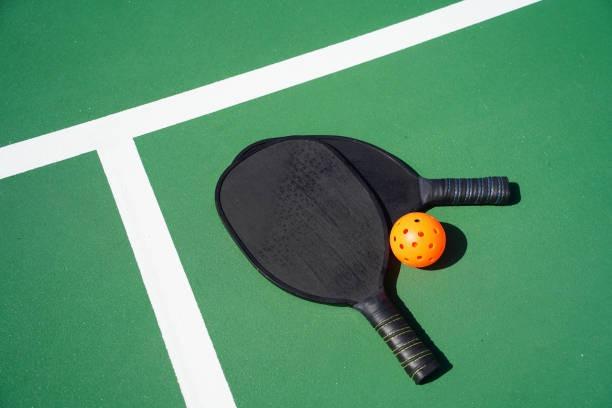
3.3 Grip and Handle Length
The grip is the bridge connecting the player and the Pickleball Paddles; its size and length directly affect grip comfort, ball control accuracy, and the possibility of hitting the ball with both hands.
Grip Size:
- How to choose: Usually expressed in inches, Pickleball Paddles have a narrow range of grip sizes (e.g., 4.0 to 4.5 inches). Choosing the right grip size is crucial.
- Too large: It will restrict the flexibility of the wrist, affect the force exerted by the wrist, and easily lead to fatigue.
- Too small: You need to grip the racket more tightly, which increases the tension in your forearm muscles, making you more prone to fatigue, and may cause the racket to slip in your hand when hitting the ball.
- Standard test method: Hold the racket, and your index finger should be able to fit just inside the gap between your palm and fingertip.
- Importance: The right grip size provides optimal comfort, control, and slip prevention.
Handle Length:
- Impact: Handle length determines whether you can comfortably use a two-handed backhand, and its effect on serve power and reach.
- Classification:
- Short Handle (approximately 4.5 inches or less): Suitable for players who primarily use one hand to hit the ball, allowing for more flexible swings.
- Standard Handle (approximately 4.5-5.0 inches): The length of most rackets, suitable for most one-handed shots, and some players can also use a two-handed backhand with some difficulty.
- Extended Handle (approximately 5.0 inches and above): Designed specifically for two-handed backhands, it provides a longer grip space, significantly increasing serve power and reach.
- Choice: If you are a TLR camera user, an extended grip is a must; if you are a SLR camera user and prefer flexible control, a standard or short grip may be more suitable.
3.4 Sweet Spot Technique
The sweet spot is the area on the pickleball paddles where hitting the ball yields the best results, providing maximum power, optimal control, and minimal vibration.
How to maximize the area of a dessert through material and structural design:
- Core thickness: A thicker core usually provides a larger sweet spot.
- Padding material: Highly elastic and high-strength materials such as carbon fiber help to expand the dessert.
- Racquet design: The wide-body racquet shape naturally allows for a larger dessert.
- Edge stability: Through thermoforming, integrated edge technology, etc., the structural strength of the racket edge is enhanced, reducing energy loss and vibration when hitting the edge, thereby turning the “dead spot” into a “live spot” and effectively expanding the sweet spot area.
- Shock absorption technology: A good shock absorption system can also make the feeling of hitting the ball in the non-sweet spot area feel closer to the sweet spot.
Importance: A larger sweet spot means a higher margin for error, especially for beginners and intermediate players, significantly improving consistency and confidence in their shots. Even professional players appreciate having a larger sweet spot to handle less-than-ideal shots in high-speed rallies.
IV. Cutting-edge technologies and innovation trends: What will future Pickleball Paddles look like?
Pickleball Paddles’ technological advancements never cease. Major brands continuously innovate in materials and construction, aiming to deliver superior performance for gamers.
4.1 Thermoformed/Forged Technology
Principle: This is the killer technology for high-end rackets, which we mentioned in the racket face material section. It fuses the carbon fiber racket face with the polymer core under high temperature and pressure, and allows the carbon fiber material to form a complete structure around the edge of the racket.
Advantages:
- One-piece molding: Eliminates the gap between the racket face and the edge protection of traditional rackets, making the racket a more robust and unified whole.
- Edge reinforcement: The carbon fiber edge wrapping greatly improves the impact resistance and durability of the racket edge, making it less prone to cracking.
- Larger sweet spot: Enhanced edge rigidity allows energy to be distributed more evenly during impact, effectively expanding the sweet spot area.
- Greater power and spin: The increased overall rigidity means more efficient energy transfer during the shot, resulting in greater explosive power and the ability to generate spin.
Challenge: This technology has extremely high requirements for production processes and equipment, so the cost is relatively high, and it is mainly used in high-end flagship products.Want to see which current models utilize this thermoforming tech? We’ve tested them in our [2026 Ultimate Buying Guide].
4.2 Vibration Damping Systems
Principle: Designed to reduce harmful vibrations during impact, improving the comfort and feel of the shot.
Different principles:
- Core shock absorption: Enhance the shock absorption capacity of the polymer core by optimizing its density and structure.
- Handle shock absorption: The handle is filled with foam, silicone or other shock-absorbing materials, or a special structural design is used to absorb vibrations.
- Edge damping: Injecting damping material into the edge of the racket or using a special edge structure further reduces vibration transmission.
Impact on comfort and ball feedback: A good shock absorption system can reduce arm fatigue for players during long matches and provide clearer and purer ball feedback, rather than that “numb” vibration.
4.3 Aerodynamic Design
Principle: By optimizing the shape and thickness of the racket’s edge, air resistance during the swing is reduced.
Effects: While it may not have the massive wing-like design of a tennis racket, even minor aerodynamic optimizations can slightly increase swing speed during high-speed swings, resulting in faster reaction and greater power. This optimization is typically achieved through rounding or tapering the edges of the racket.
4.4 Intelligent Pickleball Paddles? (Future Vision)
Currently, there are no truly “smart rackets” in the pickleball field, but there are precedents in other ball sports (such as smart tennis rackets). In the future, we may see:
- Built-in sensors: record data such as ball speed, spin, and sweet spot hit rate.
- App connectivity: Connects to a mobile app via Bluetooth to analyze shot data and provide personalized training suggestions.
- Adjustable performance: Through some mechanism (such as adjustable weights or variable stiffness structures), players can quickly adjust racket performance before or during a match.
These are still in the conceptual stage, but they undoubtedly paint an exciting blueprint for the future development of Pickleball Paddles.
VI. Routine Maintenance of Pickleball Paddles: A Way to Extend the Lifespan of Technology
Even the latest and most advanced racket technology requires careful maintenance to maximize its effectiveness and extend its lifespan.
Maintenance precautions for different materials:
- Racket Face: Regularly wipe the racket face with a damp cloth to remove ball residue and dust to maintain its friction. Avoid using strong corrosive cleaners. If the racket face shows significant wear or becomes smooth, its spin performance may decrease.
- Edge protection: Avoid severe impacts between the racket and hard objects (such as the ground or net posts). Even thermoformed edges cannot withstand extreme impacts. Once the edge protection is damaged, it should be repaired or the racket should be replaced in time to prevent damage to the internal structure.
- Grips: Grips are consumables. Replace them promptly if the grip leather becomes slippery, worn, or loses its absorbency. Regular cleaning of the grips will also extend their lifespan.
- Avoid extreme environments: Do not expose your racket to direct sunlight, high temperatures (such as in a car trunk), or extreme humidity for extended periods, as this may cause material deformation or structural damage.
How to determine performance degradation in Pickleball Paddles:
- Decreased hitting power: The ball feels less powerful than before, and the ball speed is slower.
- The sweet spot is smaller: the vibration increases significantly when hitting the ball off-center, and the racket feels much “dead”.
- Changes in the sound of the ball hitting the ground: The sound of the ball hitting the ground becomes dull or abnormal.
- Increased vibration: The arm feels a significant increase in vibration when hitting the ball.
- External damage: blistering on the racket face, cracking at the edges, loose handle, etc. If any of these issues appear, your racket may have already lost its performance, and it’s time to consider replacing it.
VII. Conclusion: Technology empowers the enjoyment of Pickleball.
Alright, fellow hardcore gamers, we’ve explored every corner of Pickleball Paddles technology together, from microscopic materials science to macroscopic structural design and cutting-edge innovation trends. I believe you now have a comprehensive and in-depth understanding of the core equipment of this sport.
We reviewed:
- Core: The respective properties of polymers, Nomex, and aluminum honeycomb.
- Racket surface: The performance differences of carbon fiber (especially thermoformed), glass fiber, and graphite, and the importance of surface texture to spin.
- Structure: The impact of different racket shapes on power, control, and sweet spot, and how weight, swing weight, and balance point shape your hitting feel.
- Innovation: How thermoforming technology, damping systems, and aerodynamic design push the boundaries of racket performance.
Understanding these technological concepts isn’t just about showing off to your friends; more importantly, it truly empowers your pickleball journey. When you hold the racket, you’re no longer just swinging a paddle, but wielding a work of art that embodies the hard work of countless engineers and cutting-edge technology.
As a long-time friend, I hope this article will help you choose your “teammates” better, improve your performance, and make you more confident and composed on the Pickleball field. Ultimately, technological advancements are all about enabling us to better enjoy the sport.
Keep exploring, keep improving, see you on the Pickleball field!

About Jason Simmons
Jason S. Simmons has been obsessively dissecting racket sports equipment for over a decade. After transitioning from competitive tennis to Pickleball in 2020, Jason realized the market was flooded with confusing marketing jargon and overpriced gear.
His Mission: To help players—especially seniors and those recovering from Lateral Epicondylitis (Tennis Elbow)—find the perfect paddle setup that balances power, control, and health.
Why Trust Jason?
- Material Science Geek: He doesn't just play; he analyzes. From the weave patterns of Toray T700 Raw Carbon Fiber to the density of Polypropylene Honeycomb Cores, Jason understands the physics behind the "pop."
- Data-Driven Testing: Jason has play-tested over 50+ models, evaluating them on Swing Weight, Twist Weight, and Dwell Time rather than just subjective "feel."
- On the Court: Based in the US, Jason actively competes in regional 4.5+ level leagues. When he isn't drilling his third-shot drops, he is likely inspecting paddles for Core Crushing or Delamination issues.
Jason believes that "A dead paddle kills your game," and is dedicated to teaching players how to maintain their grit surface for peak performance.
View all posts by Jason Simmons