Carbon Fiber vs Fiberglass Pickleball Paddles: Which Should You Choose?
Hey, pickleball lovers! Welcome to the vibrant world of pickleballs, a world that can be a bit overwhelming with choices!
Are you like me, instantly captivated by the charm of this sport the moment you step onto the Peak court? Swinging, hitting the ball, running—every point is exhilarating! But when you want to own your first paddle or upgrade your equipment, are you immediately overwhelmed by the various materials, brands, and models?
Especially when you hear about “carbon fiber” and “glass fiber,” two mainstream paddle face materials, do you wonder: what’s the difference between them? Which one is more suitable for me?
Don’t worry, you’re not alone in this dilemma! Today, we’ll discuss this topic in detail. This article is like your personal Pickleball Paddle shopping guide, using the most approachable and down-to-earth methods to help you understand these two materials, clear away the fog, and find the perfect “battlefield weapon” for you!
1. Welcome to the world of pickball: the first step in choosing a paddle!
Pickleball, a sport that combines elements of tennis, badminton, and table tennis, has rapidly gained popularity worldwide due to its ease of learning and strong social aspect. Whether you want to exercise, make new friends, or enjoy the thrill of competition, pickleball has something for you.
But like any sport, choosing the right equipment is the first step to enjoying the sport . This is especially true for the pickleball paddle , which directly affects your hitting feel, power output, control accuracy, and even your confidence on the court. A suitable paddle can lead to rapid progress, while an unsuitable one can frustrate you and even dampen your enthusiasm for the sport.
So don’t underestimate the importance of choosing a paddle! Today, we’re going to focus on one of the most crucial parts of the pickleball paddle — the paddle face material , especially those two often compared “rivals”: carbon fiber and glass fiber .
2. The Secrets of Pickleball Paddles : Unveiling the Surface Materials
Before delving into carbon fiber and glass fiber, let’s quickly understand the basic structure of a pickleball paddle . Typically, a pickleball paddle consists of three parts:
- Core : This is the “internal organs” of the paddle, usually a honeycomb structure (such as polypropylene PP honeycomb or Nomex honeycomb), which determines the paddle’s rebound, shock absorption, and feel.
- Surface/Face : This is the part we’ll focus on today, the side of the paddle that hits the ball. It determines the paddle’s friction, power transmission, and the feel of the shot.
- Edge Guard : A protective strip around the edge of the paddle to prevent damage to the edge when it hits the ground or net.
- Grip : This is where you hold the paddle. A comfortable grip allows you to better control the paddle.
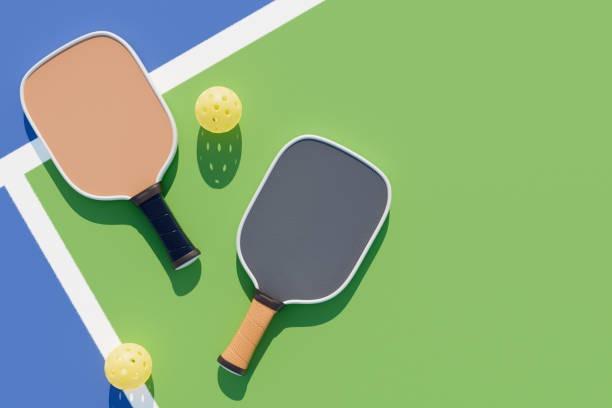
Why is the surface material considered key to feel and performance?
Imagine touching a cold piece of metal and a soft piece of fabric; the feeling is completely different, isn’t it? The same applies to the paddle face material! It directly contacts the ball and is the “first line” of energy transfer.
Different paddle face materials are like wearing different “gloves” on your hands, directly affecting:
- Hitting power: Can you easily hit a “powerful shot”, or do you need to exert more effort?
- Ball control accuracy: Does the ball obediently land in the place you want, or does it often “disobey” you?
- Spinning ability: Can you easily generate sidespin or backspin that will give your opponent a headache?
- Feel feedback: When you hit the ball, how clearly can you feel the “ball feel”? Is it hard or soft?
Now that you understand these points, do you have a clearer understanding of the importance of paddle surface materials? Next, let’s explore the world of carbon fiber and glass fiber!
3. [Carbon Fiber] Racquet Face: A Symbol of Precision and Control
When you hear the word “carbon fiber,” do you think it sounds high-tech and professional? That’s right, it is indeed the crystallization of modern materials science, and you can see it in aerospace, F1 racing cars, and even high-end bicycles.
What is carbon fiber?
You can think of carbon fiber as a kind of “high-tech fabric” woven from extremely fine carbon filaments. These filaments are thinner than a human hair, yet exceptionally strong. By combining this fabric with resin and processing it under high temperature and pressure, we can form the carbon fiber composite material we see. Its characteristics are that it is lightweight, strong, and extremely stable.
The “superpowers” of carbon fiber paddle faces:
Delicate feel and precise control Carbon fiber paddle faces typically have a softer feel, resulting in a longer contact time between the ball and the paddle face upon impact. This feels like the paddle face is “grabbing” the ball.
This “ball-attracting” sensation allows for more precise control over the ball’s landing point and direction. If you’re the type of player who enjoys playing “short shots,” controlling the rhythm, and accurately sending the ball into your opponent’s open spaces, a carbon fiber paddle face is definitely for you!
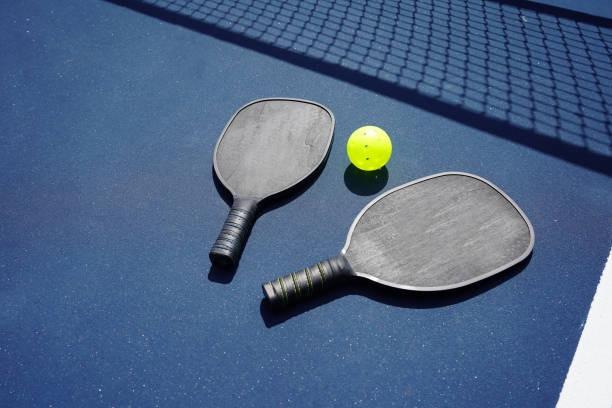
Spin Master Carbon fiber paddle faces, especially textured ones, offer excellent friction. This means they “grip” the ball better, applying more spin as you swing. Whether it’s topspin, backspin, or sidespin, carbon fiber paddle faces help you generate it effortlessly, making your shots more unpredictable and harder for your opponent to anticipate. If you dream of becoming a “Spin Prince” or “Spin Princess,” a carbon fiber paddle face will be your powerful ally!
Durability and Stability Carbon fiber is renowned for its high strength and durability. Carbon fiber paddle faces typically offer better impact resistance and structural stability. This means your paddle will maintain consistent performance for longer under normal use, and is less prone to deformation or damage. It’s like a reliable partner, accompanying you on the court, enduring and reliable.
The “minor drawbacks” of carbon fiber paddle heads:
- Power Transfer: Because the carbon fiber paddle face is relatively “soft,” it absorbs some of the power upon impact. Therefore, if you want to hit a powerful “cannon shot,” you may need to exert more force yourself. Unlike some paddle faces, it doesn’t easily “boom” the ball. The sound produced upon impact is usually also more muffled.
- Price Considerations: Carbon fiber, as a high-performance material, has a relatively high production cost. Therefore, pickleball paddles with carbon fiber facets are generally more expensive than those with fiberglass facets. This may be a factor to consider for beginners with limited budgets.
Who is suitable for a carbon fiber paddle face?
- Control-oriented players: If you like to control the pace of the game through precise placement and varied spin.
- For players who prefer a delicate feel: If you’re looking for the “sucking” sensation and clear feedback when the ball contacts the paddle face during a shot.
- Advanced players: If you already have a certain foundation and want to raise your skill ceiling by making your shots more complex.
- For players who prioritize stability and durability: If you want your paddle to perform consistently and last a long time.
4. Fiberglass paddle face: the embodiment of power and explosiveness.
Having discussed the high-end carbon fiber, let’s now take a look at fiberglass, which also holds a place in the world of peakballs.
What is fiberglass?
Fiberglass , as the name suggests, is a composite material made by drawing glass into extremely fine filaments , weaving them into a fabric-like structure, and then bonding them with resin. It is ubiquitous in our daily lives, found in things like ship hulls, car parts, and even some furniture. Its characteristics include good flexibility, high strength, and relatively low cost .
The “superpowers” of fiberglass paddle surfaces:
Powerful and crisp shots : Fiberglass paddle faces are generally stiffer and more flexible than carbon fiber paddle faces. When the ball hits the paddle face, it acts like a spring, quickly transferring most of the force back to the ball, producing a powerful “pop” and greater explosive power . This means you don’t need to exert a lot of strength to easily hit powerful shots. If you enjoy hitting hard shots and relish the thrill of the ball bouncing out, a fiberglass paddle face will make you feel much more “effortless”!
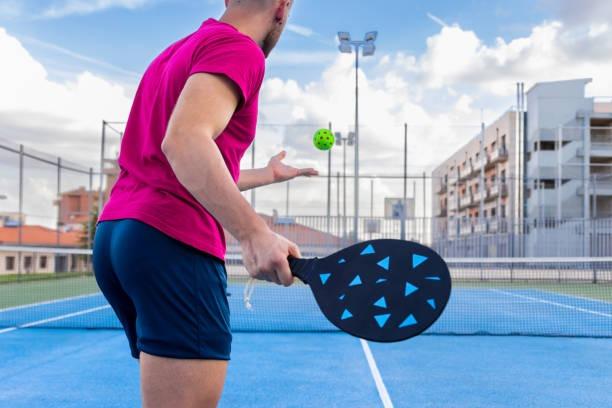
High tolerance for the sweet spot : For beginners, hitting the exact center of the paddle face (the “sweet spot”) every time is quite difficult. Due to its material properties, a fiberglass paddle face typically offers a wider sweet spot and higher tolerance for error . Even if you don’t hit the center of the paddle face perfectly, you can still hit a decent shot, reducing frustration during the learning phase and allowing you to enjoy the game more quickly.
Value-for-Money Choice : Compared to carbon fiber, fiberglass has a lower production cost, which is directly reflected in the price of the paddles. Fiberglass paddle heads are generally more affordable , making them an ideal choice for players with limited budgets or beginners. You can buy a decent paddle without emptying your wallet.
The “minor drawbacks” of fiberglass paddle surfaces:
Control and Spin : Due to the stiffer and faster rebound of the fiberglass surface, it may not be as effective as a carbon fiber surface in terms of “spin grip” and friction. This means it may be slightly less capable of producing precise control and strong spin. Your shot trajectory may be more direct, but with relatively less variation.
Feel feedback : The fiberglass paddle face may feel stiffer when hitting the ball, lacking some of the “delicate feel” of carbon fiber. Some players may find the vibration more noticeable, or the ball feel less distinct than with carbon fiber.
Who is suitable for a fiberglass paddle surface?
- Power-type players : If you like to hit the ball hard and pursue explosive power and speed in your shots.
- For beginners : If you are just starting out with pickleball, you need a paddle that is forgiving, easy to use, and affordable.
- For players on a limited budget : If you want decent hitting performance at a more economical price.
- Players who like the “POP” sound : If you enjoy the crisp, loud “POP” sound when hitting the ball.
5. Carbon fiber vs. glass fiber: A chart to understand the key differences
To help you understand the difference between these two materials more intuitively, we’ve created a comparison table so you can see it at a glance!
| Comparison Dimensions | carbon fiber paddle face | Fiberglass paddle surface |
| Main features | Control, rotation, delicate feel, stability | Power, explosiveness, high tolerance for error, cost-effectiveness |
| feel of hitting the ball | Soft, strong ball absorption, and long contact time between the ball and the paddle face | Hard, direct, with a “POP” sound, the ball bounces quickly. |
| Power output | It requires more effort from oneself, and the power transmission is more direct, making it suitable for active exertion. | It leverages momentum well, makes it easy to generate power, and has a “launching” feel, making it suitable for passive power generation. |
| Ball control | Excellent, precise landing point, clear feedback. | Good, but perhaps not as fine as carbon fiber, and the tactile feedback is relatively vague. |
| Rotary manufacturing | Excellent, strong friction, easy to generate various rotations | Good, but not as good as carbon fiber; its spin-forming capability is slightly weaker. |
| Durability | Good quality, strong impact resistance, and stable structure. | Good, but perhaps not as wear-resistant as carbon fiber; edges may wear easily. |
| Price range | Typically higher-end (mid-to-high-end market) | Typically more accessible (entry-level and mid-range markets) |
| Target audience | Advanced ball control type, pursuing technical skill, liking delicate feel, emphasizing stability | Beginner-friendly, power-oriented, budget-friendly, for those seeking explosive shots. |
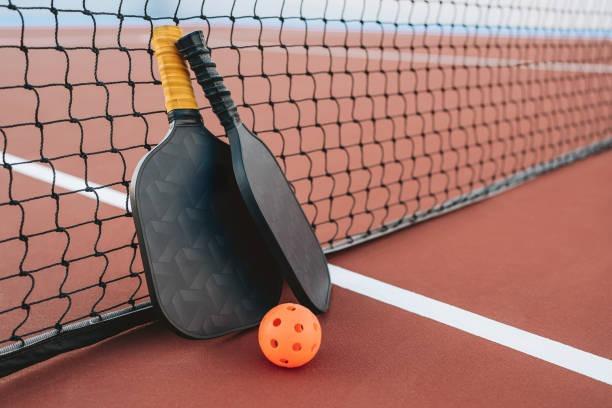
6. No more agonizing over choosing a paddle: Find the one that suits you best!
Having read this, do you now have a more comprehensive understanding of carbon fiber and fiberglass? Now, it’s time to make a choice based on your own circumstances! Remember, there is no best paddle, only the paddle that best suits you!Ready to see specific model recommendations based on these materials? Check out our [2026 Pickleball Paddle Ultimate Buying Guide: Material, Specifications, and Playing Techniques Explained]
1. What is your playing style?
- Are you a “technical player”? Do you enjoy controlling your opponent through precise shot placement and varied spins, reveling in the thrill of “using minimal force to overcome great strength”? Then a carbon fiber paddle face can better support your technical skills.
- Are you a “power player”? Do you enjoy smashing the ball with force, seeking the thrill of winning with a single shot, or do you want to hit the ball with less effort? Then a fiberglass paddle face can give you greater explosive power.
- Are you an “all-rounder”? Do you want good control while also having a certain amount of power? Then there are some paddle faces on the market made of hybrid materials (such as carbon fiber surface + glass fiber core) or specially treated carbon fiber paddle faces (to increase rebound) that are worth exploring.
2. What is your skill level?
- New to pickball? If you’re a beginner, a fiberglass paddle head might be a more friendly starting point. It’s more affordable, forgiving, and helps you build confidence faster, allowing you to enjoy hitting the ball more easily.
- Already playing quite well? If you already have a certain foundation and are starting to pursue more refined ball control and more advanced skills, then a carbon fiber paddle face may help you break through the bottleneck and reach a new level.
3. What is your budget?
- Limited budget? No problem, fiberglass paddle surfaces can still provide excellent performance, allowing you to get a high-quality experience within a limited budget.
- you have a sufficient budget, then you can consider a higher-performance carbon fiber paddle face, or a paddle face made of special materials from some top brands.
4. What kind of feel do you prefer?
- smooth “ball-absorbing” feel and clear feedback when you hit the ball ? Choose carbon fiber .
- you prefer the hard, direct “POP” sound and explosive power of a shot ? Choose fiberglass .
5. Don’t forget to test it out!
All the suggestions above are just theoretical references. If possible, the best way is to try them out yourself! Ask your fellow players if they have paddles you can borrow to try out; or go to stores that offer trial play. Only by swinging and hitting the ball yourself can you truly feel which paddle face feels best for you!
7. Besides materials, these small details are also important!
When choosing a pickleball paddle , besides the face material, there are other equally important factors that will affect your feel and performance. Don’t forget to consider them too!
1. The weight of the paddle: the key to its balance between light and heavy.
- Tap lightly (7.0-7.8 oz/198-221 g) :
- Advantages : Fast swing speed, quick reaction, reduced arm strain, suitable for fast volleys and wrist power.
- Disadvantages : Relatively weak power, requiring more effort from the player, and the stability of the shot may be slightly worse.
- Suitable for : beginners, female players, and players who enjoy quick reactions and ball control.
- Medium-weight paddles (7.9-8.4 oz/224-238 g) :
- Advantages : Good balance, combining power and ball control, making it an ideal choice for most players.
- Disadvantages : It’s fairly average and may not have the same outstanding characteristics as extremely light or extremely heavy paddles.
- Suitable for : The vast majority of players, including intermediate and advanced players.
- Heavyweight (8.5 oz/241 g and above) :
- Advantages : High hitting power and stability; effectively absorbs the impact of incoming balls; suitable for powerful smashes and defense.
- Disadvantages : Slow swing speed, which can easily cause arm fatigue and is not suitable for long-term, fast-response maneuvers.
- Suitable for : Power-type players, players who like baseline drives, and players who seek penetrating power in their shots.
2. Grip size: Comfortable like shaking hands.
Choosing the right grip size is just as important as choosing the right shoes! A grip that is too thick or too thin will affect your paddle comfort and hitting performance.
- How to judge? Generally, when you hold the paddle, the index finger of your non-paddle hand can just fit into the gap between your palm and fingertip. This size is just right.
- A grip that is too thin may cause you to grip too tightly, resulting in excessive wrist strain and potential injury.
- A grip that is too thick will restrict wrist flexibility and affect rotation and power transfer.
3. Racquet shape: Square or round, each has its own merits.
Pickleball paddles come in a variety of shapes, the most common being:
- Wide Body paddle : The paddle face is wider, the sweet spot is larger, and the margin for error is higher, making it suitable for beginners.
- Elongated paddles : These paddles have a longer face, a wider hitting range, and provide greater leverage, making them suitable for players seeking more power and longer contact distance.
- Classic face : It lies between the two, offering a good balance.
4. Core Material: The Secret of the Honeycomb Core
Although we’re mainly talking about the paddle face today, the honeycomb core inside the paddle also has a significant impact on its performance.
- Polypropylene (PP) honeycomb : the most common type, offering a soft feel and good shock absorption.
- Nomex Cellular : Stiffer, delivering greater power and a “POP” sound.
- Aluminum honeycomb : Lightest, but relatively less durable.
The combination of different core materials and paddle face materials can produce a wide variety of feel and performance, which is the charm of Pickleball Paddle !
8. Pickleball Paddle Care Tips: Help Your Partner Live Longer
Your Pickleball Paddle is your loyal partner on the field. Take good care of it, and it will last you a long time!
- Daily cleaning : After each game, gently wipe the paddle face with a damp cloth to remove dust and ball marks, keeping the paddle face clean, especially the textured paddle face, to better maintain friction.
- Avoid extreme environments : Do not expose the paddle to direct sunlight or high-temperature environments for extended periods, as this may cause the paddle surface material to deform. Similarly, avoid humid environments.
- Impact protection : Avoid violent impacts between the paddle and the ground, walls, or net posts. While edge protection can provide some protection, excessive impacts can still damage the paddle’s structure.
- Regular inspection : Check if the edge protector of the paddle is loose or damaged, and if the grip is worn. If the edge protector is detached, it can be glued back on; if the grip is worn, it can be replaced.
9. Frequently Asked Questions (Q&A): Helping you clear up any doubts.
Q: Is a carbon fiber paddle surface always better than a fiberglass paddle surface? A : Not necessarily! “Good” is relative. Carbon fiber paddle faces excel in control, spin, and feel, but they are more expensive and require more effort to generate power. Fiberglass paddle faces, on the other hand, offer advantages in power, forgiveness, and cost-effectiveness. The choice depends entirely on your playing style, skill level, budget, and personal preference.
Q: I’m a beginner, which one should I choose? A : For beginners, we usually recommend starting with a fiberglass paddle face. It’s more affordable, forgiving, and allows you to enjoy hitting the ball more quickly, reducing frustration. Once you’ve gained some experience and understand your playing style, you can then consider upgrading to carbon fiber or other more professional paddle faces.
Q: Why do some paddles have both of these materials (mixed surfaces)? A : Yes, some paddles use a “hybrid” design, such as a carbon fiber face paired with a glass fiber core, or combining the advantages of both materials in the face. This is usually to pursue more balanced performance, such as having the control of carbon fiber while also having the power and explosiveness of glass fiber. This is a more advanced option, suitable for players with specific needs.
Q: Is a more expensive paddle always better? A : Not entirely. Price is often related to factors such as material costs, brand premium, and technological content. High-end paddles typically use higher-quality materials and more advanced manufacturing processes, offering superior performance. However, for beginners or intermediate players, a mid-priced paddle may be perfectly adequate, or even more suitable than a high-end paddle. The key is to find one that suits you, not necessarily the most expensive one.
10. Conclusion: There is no best, only what is most suitable for you!
Alright, that concludes today’s in-depth reveal of Pickleball Paddle materials! We’ve explored the characteristics, advantages, disadvantages, and target audiences of carbon fiber and glass fiber paddle surfaces, and also shared tips on selection and maintenance.
Hopefully, this article will give you a clear understanding of these two mainstream paddle face materials, and enable you to make the wisest choice based on your own circumstances.
Remember, the fun of peakball lies in participation, improvement, and finding the equipment that best suits you! Whether it’s the precise control of carbon fiber or the explosive power of fiberglass, whatever makes you feel confident and happy on the court is the best choice!
Now, with your anticipation for your new paddle, head to the court, sweat it out, and enjoy the boundless charm of peakball! See you on the court!
Carbon Fiber vs Fiberglass for Beginners
Beginners should not choose by material name alone. Fiberglass can be a strong value choice for casual play because it often feels lively and costs less. Carbon fiber can be better for players who want more control, more surface grip, and a paddle they can grow into.
| Factor | Fiberglass | Carbon Fiber |
|---|---|---|
| Cost | Usually lower | Usually higher |
| Feel | Poppier and more lively | More controlled and connected |
| Spin | Moderate | Stronger with textured/raw carbon face |
| Beginner fit | Good for budget and casual play | Good for serious learners |
| Best next step | Compare fiberglass paddles | Compare carbon fiber paddles |

About Jason Simmons
Jason S. Simmons has been obsessively dissecting racket sports equipment for over a decade. After transitioning from competitive tennis to Pickleball in 2020, Jason realized the market was flooded with confusing marketing jargon and overpriced gear.
His Mission: To help players—especially seniors and those recovering from Lateral Epicondylitis (Tennis Elbow)—find the perfect paddle setup that balances power, control, and health.
Why Trust Jason?
- Material Science Geek: He doesn't just play; he analyzes. From the weave patterns of Toray T700 Raw Carbon Fiber to the density of Polypropylene Honeycomb Cores, Jason understands the physics behind the "pop."
- Data-Driven Testing: Jason has play-tested over 50+ models, evaluating them on Swing Weight, Twist Weight, and Dwell Time rather than just subjective "feel."
- On the Court: Based in the US, Jason actively competes in regional 4.5+ level leagues. When he isn't drilling his third-shot drops, he is likely inspecting paddles for Core Crushing or Delamination issues.
Jason believes that "A dead paddle kills your game," and is dedicated to teaching players how to maintain their grit surface for peak performance.
View all posts by Jason Simmons