When to Replace Your Pickleball Paddle: 6 Signs It’s “Dead” (2026 Guide)
Dear Pickleballers,
Have you felt like your game has been slipping lately? Maybe your shots aren’t as precise as they used to be, or you just can’t generate the same spin you’re famous for.
Before you start doubting your skills or blaming “an off day,” stop. As a seasoned pickleball equipment expert, I’m here to tell you a harsh truth:
It’s probably not you. It’s your paddle.
In my extensive testing, I’ve seen countless players struggle with performance issues without realizing their equipment has quietly failed them. Instead of replacing a worn-out tool, they blame their technique.
Today, we’re going to answer a critical question for your game:
When to replace your pickleball paddle? Your trusty court companion might have already played its final game.
The Mystery of Paddle Lifespan: How Long Do They Really Last?
“How long will my pickleball paddle last?” The answer to pickleball paddle lifespan depends entirely on how hard you play.
How long do pickleball paddles last?
- Pro/Hardcore Players (3-5 times/week): Expect a lifespan of only 3-6 months. High-intensity smashes and daily play rapidly exhaust the core’s rebound capabilities.
- Recreational Players (1-2 times/week): Typically lasts 1-3 years.
However, time isn’t the only factor. Paddles are consumables, much like running shoes. Even the most expensive paddle will eventually die. The key is recognizing the warning signs before they ruin your match.
6 Signs Your Paddle is “Dead” (The Diagnosis)
Don’t let a dead paddle limit your potential. If your gear shows any of these symptoms, it’s time to retire it.
Sign 1: The “Dead Spot” Phenomenon
This is the most direct sign of a failed paddle.
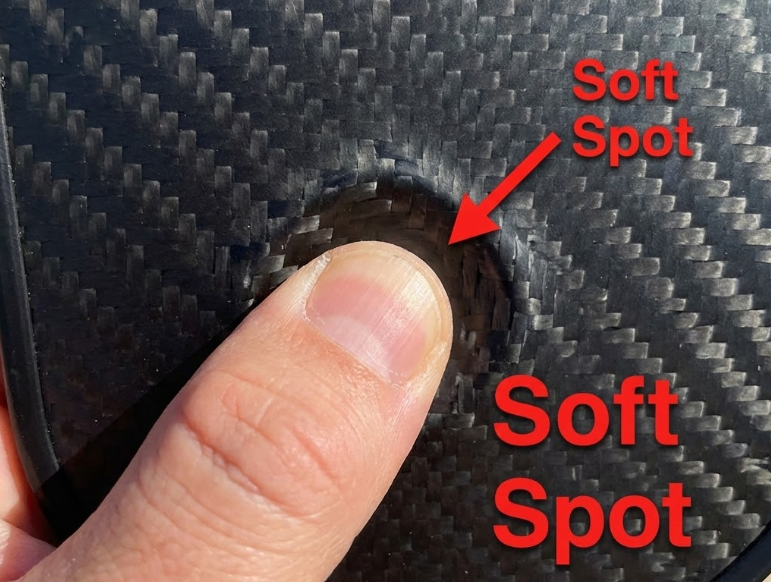
The Symptom: Even when you hit the ball perfectly in the center, it feels like hitting mush. There is no “pop” sound, and your shots lack their usual speed and depth.
The Thumb Test: Press your thumb firmly into the center of the paddle face. If you feel a distinct softness or sponginess (like pressing into cardboard), the internal honeycomb core has collapsed or been crushed.
The Verdict: The core is dead. It cannot be fixed.
Sign 2: Loss of Spin (The Surface is Gone)
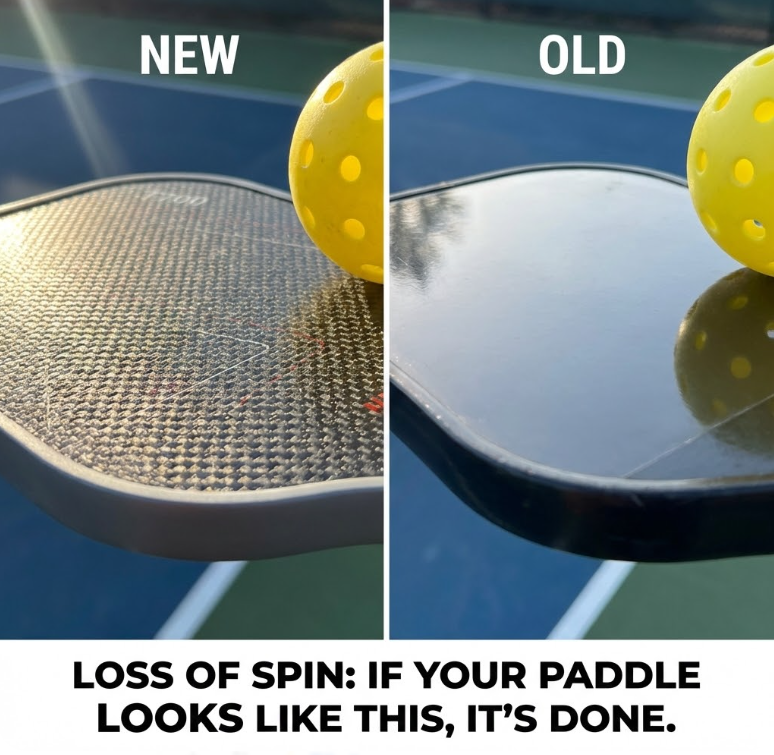
The Symptom: Your signature topspin drives are sailing long, and your slices are floating instead of biting.
The Cause: The grit (surface texture) has been worn smooth. Run your fingers over the face; if it feels as smooth as a baby’s skin, the friction needed for spin is gone.
The Fix Attempt: Sometimes, it’s just clogged with ball plastic. Try to clean your paddle first. If it remains smooth after a deep clean, the texture is permanently worn out.
Sign 3: The Dreaded “Paddle Rattle”
The Symptom: When you shake your paddle, it sounds like a maraca. There is a loose, sandy noise inside.
The Cause: This is paddle rattle. It usually means pieces of the honeycomb core have broken off internally, or the glue inside the handle has failed. This structural failure leads to inconsistent shots.
Sign 4: The Hollow Sound
The Symptom: Your hits no longer sound like a crisp “pop” or “thud.” Instead, they make a dull, hollow sound.
The Cause: This often indicates delamination—where the face material has separated from the core, changing the acoustic chamber of the paddle.
Sign 5: Visible Delamination & Bubbles
The Symptom: Look closely at the paddle face. Do you see any bubbles, blisters, or raised areas?
The Severity: This is a major structural failure. Furthermore, using a delaminated paddle is illegal in sanctioned tournament play. Replace it immediately.
Sign 6: Loose Edge Guard
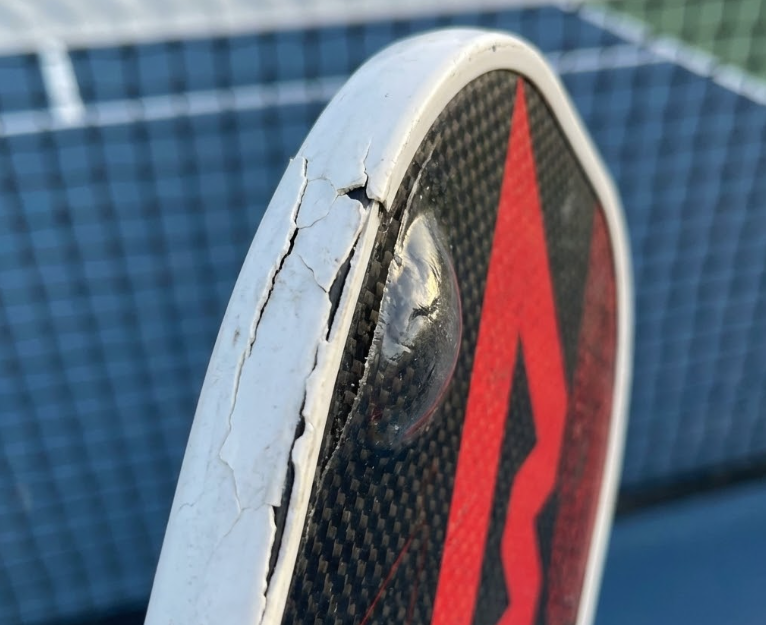
The Symptom: The protective rim is cracking or peeling away from the paddle body.
The Fix: If it’s just a minor gap, you might be able to fix your loose edge guard. However, if the guard is shattered and exposing the internal core to the elements, the paddle is compromised.
Why Do Cheap Paddles Die Faster?
It’s not bias; it’s physics.
- Material Limits: Entry-level fiberglass paddles often use spray-on grit. This texture wears off after just a few months of play, accelerating loss of spin.
- Core Fatigue: Lower-density polymer cores in budget paddles are more prone to structural fatigue, developing dead spots much faster than pro-level gear.
Upgrade Time: Stop Struggling, Start Winning
When your paddle flashes these “dead” signs, forcing yourself to use it won’t just hurt your game—it can actually hurt your elbow (tennis elbow) due to the increased vibration.
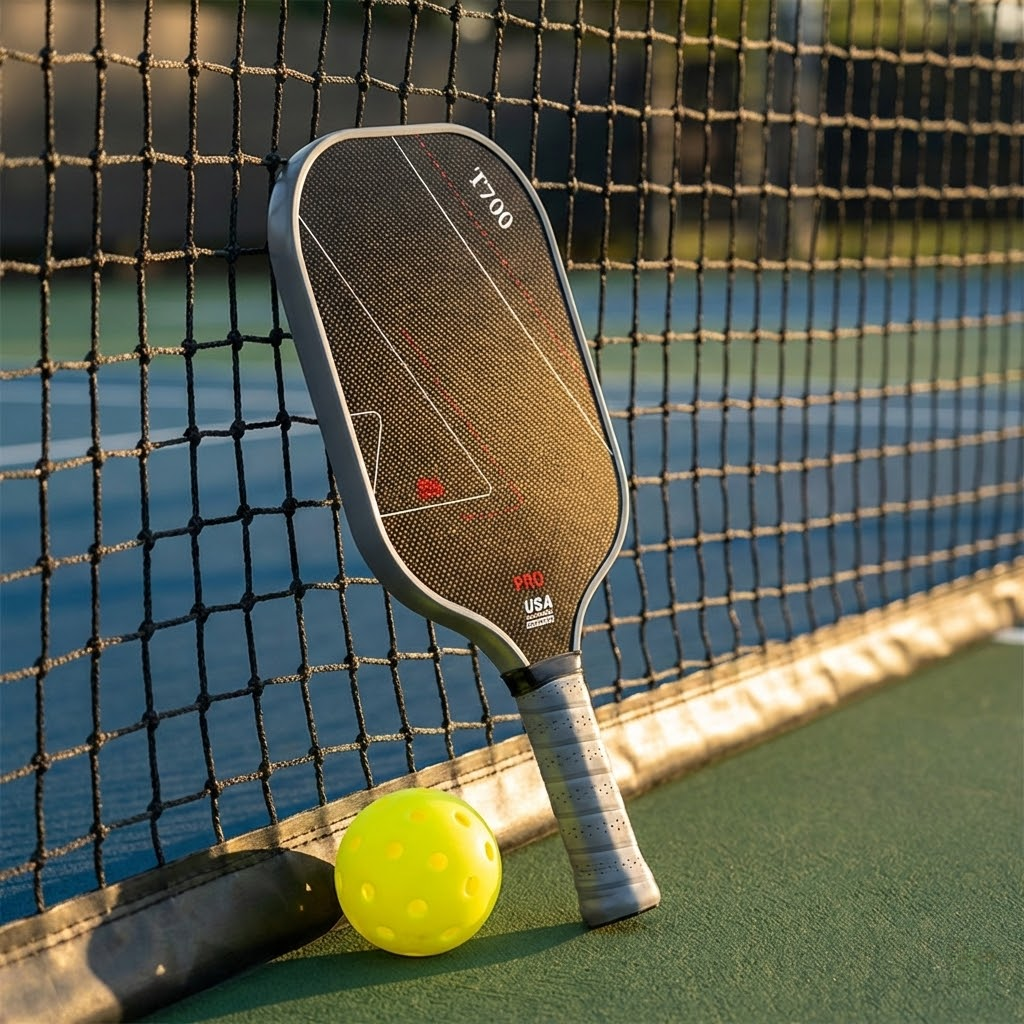
Investing in a new paddle is an investment in your skills.
Expert Recommendation: The Durable Carbon Fiber Upgrade
If you want to extend your gear’s “service life,” I strongly recommend upgrading to a long-lasting T700 carbon fiber paddle.
- The Advantage: Raw T700 Carbon Fiber uses a woven texture (not spray-on), providing a significantly long-lasting spin texture.
- The Build: Our unibody thermoformed construction resists dead spots and edge delamination far better than standard assembled paddles.
Frequently Asked Questions About Paddle Lifespan
How long does a pickleball paddle last?
On average, a pickleball paddle lasts 1-3 years for recreational players. However, competitive players who play 3-4 times a week may need to replace their paddle every 4-6 months due to core fatigue and surface grit wear.
What are dead spots on a pickleball paddle?
Dead spots are areas on the paddle face where the internal honeycomb core has broken down or crushed. When the ball hits a dead spot, it won’t bounce off with the usual power or ‘pop’, often leading to nets or short returns.
Do carbon fiber paddles last longer?
Generally, yes. High-quality carbon fiber paddles (especially Raw Carbon Fiber T700) maintain their surface texture (spin) longer than spray-on grit paddles. However, the internal polymer core will still eventually degrade with heavy use.

About Jason Simmons
Jason S. Simmons has been obsessively dissecting racket sports equipment for over a decade. After transitioning from competitive tennis to Pickleball in 2020, Jason realized the market was flooded with confusing marketing jargon and overpriced gear.
His Mission: To help players—especially seniors and those recovering from Lateral Epicondylitis (Tennis Elbow)—find the perfect paddle setup that balances power, control, and health.
Why Trust Jason?
- Material Science Geek: He doesn't just play; he analyzes. From the weave patterns of Toray T700 Raw Carbon Fiber to the density of Polypropylene Honeycomb Cores, Jason understands the physics behind the "pop."
- Data-Driven Testing: Jason has play-tested over 50+ models, evaluating them on Swing Weight, Twist Weight, and Dwell Time rather than just subjective "feel."
- On the Court: Based in the US, Jason actively competes in regional 4.5+ level leagues. When he isn't drilling his third-shot drops, he is likely inspecting paddles for Core Crushing or Delamination issues.
Jason believes that "A dead paddle kills your game," and is dedicated to teaching players how to maintain their grit surface for peak performance.
View all posts by Jason Simmons