Buying a used Pickleball paddle? Beware of the hidden dangers of “dead cores”—you might lose money on this deal!
Hey fellow pickleball enthusiasts! Have you recently seen that Joola or Selkirk flagship paddle you’ve been eyeing on eBay or Facebook Marketplace for half the original price and felt like you’d struck gold? I totally understand that excitement!
But as an expert who has been deeply involved in pickleball equipment for many years, I have to pull you back and throw some cold water on you—stop! Buying a used pickleball paddle is far more complicated than you think; in fact, it’s a gamble you’re likely to lose.
In my experience, many players have been misled by the “beautiful appearance” of second-hand paddles, often ending up with nothing to show for their money.
Unlike tennis rackets, which can be revitalized by simply changing the strings, pickleball paddles are essentially useless once their core components fail.
Buying a second-hand paddle is like buying Schrödinger’s cat; you open the box full of anticipation, but you’ll likely find it’s already beyond repair.
I. What is a “Dead Core”? Your paddle may have lost its sole!
As we all know, pickleball’s core technology lies in its polymer honeycomb core. This honeycomb structure is the source of the paddle’s power, control, and feel.
But like any consumable, after thousands of high-speed impacts, the honeycomb core material will fatigue. It will gradually lose its original elasticity and structural integrity, which is what we often call a “dead core” or “dead spot.”
How to Detect a “Dead Core”?
- A duller sound: When you gently tap the surface of a paddle with a ball, a normal paddle will produce a crisp and even sound. However, a paddle with a “dead core” will produce a dull sound, like tapping on a piece of rotten wood, or different areas may produce different sounds.
- Uneven elasticity: In my tests, I found that paddles with a “dead core” often have a very small sweet spot. The center area may still have a little bit of elasticity, but if you deviate slightly from the center, the paddle becomes powerless, and the ball hits softly, completely lacking speed and depth.
- You need to swing harder: to compensate for the decline in paddle performance, you have to increase the force of your swing. Over time, this will not only consume more of your energy but may also lead to sports injuries to your wrist, arm, or shoulder.
The most frustrating thing is that a secondhand seller might confidently tell you, “It’s only been played a few times; it’s almost brand new,” but he might be a hardcore gamer who plays for 4 hours a day, focusing on aggressive attacks. These internal damages, invisible to the naked eye, are simply impossible to detect from photos or brief descriptions.
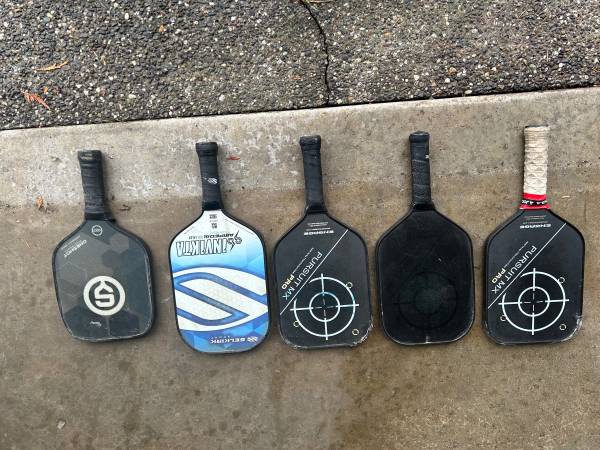
II. The Invisible Killers: Delamination and Core Crush
Besides a “dead core,” there are two other more hidden and fatal internal damage types that can completely ruin your used paddle and even violate the competition rules:
Core Crush
This refers to the partial or complete collapse of the honeycomb core structure inside the paddle due to excessive stress. The collapsed area becomes abnormally soft, causing the paddle surface to indent too deeply upon impact, prolonging the contact time between the ball and the paddle, thus creating a “trampoline effect”—an abnormally increased initial velocity of the ball.
While this might sound like it could generate more power, it actually leads to
- Severely reduced ball control: The paddle becomes unpredictable, and the ball’s landing point is difficult to control.
- Violation of the rules: According to the International Pickleball Federation (IPF), any paddle that can “excessively” increase ball speed may be considered illegal. If the referee inspects your paddle and finds a core collapse, you may be banned from using the paddle and even disqualified from the competition.
In my experience, a paddle with a collapsed core may appear perfectly fine on the surface, but when you press or hit the ball, you’ll feel a noticeable “softness” or “hollowness” in certain areas.
Delamination
Delamination refers to the separation between the paddle’s surface material (such as carbon fiber) and the internal honeycomb core. This usually occurs at the edges or sweet spot of the paddle. Delamination can lead to:
- Abnormal hitting sound: When you hit the ball, the paddle makes strange “thump” or “buzz” noises instead of the normal hitting sound.
- Interruption of power transmission: Because the surface and core are no longer tightly connected, the power of the shot cannot be effectively transmitted to the ball, resulting in a weak shot and a vague feel.
- Inconsistent feel: The feel of different areas of the paddle varies greatly, making it difficult to hit the ball consistently.
These two types of internal injuries are almost completely invisible from the outside. You’ll only realize you’ve been tricked when you actually play your first ball.
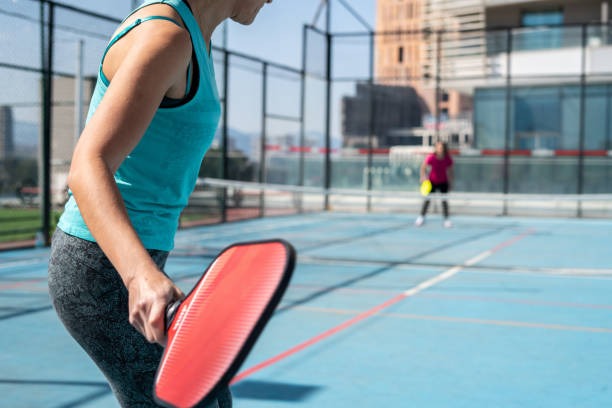
III. Matte surfaces have a limited lifespan: your “spinning tool” may have already worn smooth!
In modern pickleball, spin is key to improving technique and defeating opponents. The carbon fiber grit texture of the paddle is the secret weapon for generating spin.
This rough surface increases friction between the ball and the paddle, allowing you to easily slice, lift, and apply sidespin.
However, this matte finish is not permanent. Even with the best T700 carbon fiber faces, after 3 to 6 months of intensive use, the matte texture in the sweet spot will gradually wear down due to the impact and friction of the ball.
What are the consequences? Buying a used paddle is likely like buying a race car with “bald tires”! It might look cool, but you’ve lost the most important aspect: spin. Without the textured surface, your serves, volleys, and lobs will lose their threat, significantly reducing your competitiveness. It’s like a race car with a powerful engine but fitted with worn-out tires—it simply can’t perform to its full potential.
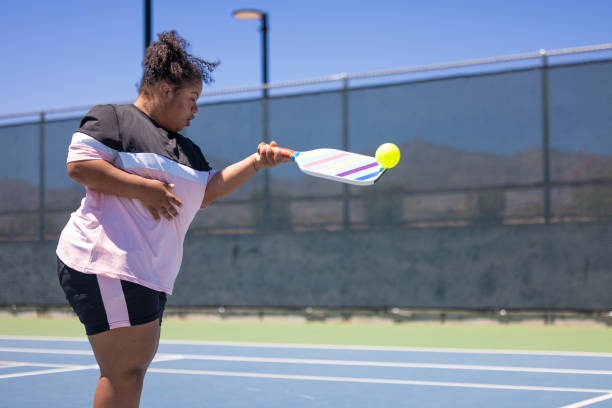
IV. Warranty expires: You assume all risks associated with your investment!
When you purchase a brand-new pickleball paddle, you usually receive a product warranty from the brand. This is like buying peace of mind insurance.
However, the vast majority of pickleball paddle brands offer non-transferable warranties. This means that the warranty is only valid for the first buyer.
If you buy a paddle from the secondhand market, and the paddle develops quality problems (such as cracked edge protectors, a loose grip, or even more serious internal damage), you’ll have no recourse. The $100 you spent could easily be wasted. You’ll have no protection and will simply have to accept your loss.
V. A Smarter Choice: The all-new mid-range paddle will always outperform the crippled high-end paddles!
Now, let’s do the math and see which option is more worthwhile:
|
Features/Selection |
Option A: Used brand-name paddles |
Option B: Brand new mid-range paddle with high cost-performance ratio |
|
Price |
Approximately $100 (original price $200-$250) |
Approximately $80-$100 |
|
Warranty |
No warranty (non-transferable) |
1-year original manufacturer warranty |
|
Core state | Unknown internal damage (possibly “dead core,” delamination, or collapse). |
100% brand new honeycomb core, stable performance |
|
Frosted surface |
Severe wear and tear, resulting in significantly reduced rotational performance. |
Original T700 carbon fiber plate with frosted finish, powerful rotation capability |
|
Risk |
Extremely high risk (paying money to buy junk, no after-sales service) |
Zero risk (A brand new experience, guaranteed) |
|
Cost-effectiveness |
Extremely low (seemingly cheap, but actually wasteful) |
Extremely high performance (reliable and excellent value for money) |
|
Psychological feelings |
Worry, disappointment, and possible anger |
Confidence, satisfaction, enjoyment |
surfaces andThe conclusion is clear: Better to buy a brand new reliable workhorse than a broken Ferrari. A brand-new mid-range paddle with high cost-performance, reliable performance, a comprehensive warranty, and a completely new user experience will always outperform a crippled high-end paddle with various internal damages and worn surfaces, and no warranty whatsoever.
Summary and Recommendations: Stay away from the secondhand market and embrace a worry-free experience!
pickleballAs a pickleball equipment expert, my final advice is: unless you’re a very close friend who knows your playing frequency, intensity, and paddle maintenance, please stay away from the secondhand Pickleball paddle market. The risks are simply too high; you might end up paying a much higher price for a slightly cheaper option, ultimately losing more than you gain.
Looking for a brand new paddle with a manufacturer’s warranty, excellent feel, reliable performance, and a price comparable to a used paddle? Don’t hesitate any longer! Check out our [Brand New T700 Series] now and discover your perfect weapon to unleash your skills on the court, enjoying the thrill and peace of mind with every shot!

About Jason Simmons
Jason S. Simmons has been obsessively dissecting racket sports equipment for over a decade. After transitioning from competitive tennis to Pickleball in 2020, Jason realized the market was flooded with confusing marketing jargon and overpriced gear.
His Mission: To help players—especially seniors and those recovering from Lateral Epicondylitis (Tennis Elbow)—find the perfect paddle setup that balances power, control, and health.
Why Trust Jason?
- Material Science Geek: He doesn't just play; he analyzes. From the weave patterns of Toray T700 Raw Carbon Fiber to the density of Polypropylene Honeycomb Cores, Jason understands the physics behind the "pop."
- Data-Driven Testing: Jason has play-tested over 50+ models, evaluating them on Swing Weight, Twist Weight, and Dwell Time rather than just subjective "feel."
- On the Court: Based in the US, Jason actively competes in regional 4.5+ level leagues. When he isn't drilling his third-shot drops, he is likely inspecting paddles for Core Crushing or Delamination issues.
Jason believes that "A dead paddle kills your game," and is dedicated to teaching players how to maintain their grit surface for peak performance.
View all posts by Jason Simmons