Stop wasting money: Why you don’t need a $250 Pickleball paddle to win (Unveiling the secrets of brand taxes)
Hey, my fellow pickleball enthusiasts! I’m your pickleball equipment expert, and today we’re going to have a candid chat: are expensive paddles really worth it? I know that many people new to pickleball get itchy when they see top players using paddles that cost two or three hundred dollars, thinking, “If I just buy the same paddle as Ben Johns, I can play like Ben Johns.”
To be honest, we call this kind of thinking “Gear Acquisition Syndrome (GAS).” Reality is often harsh: you might still be the same person, just with $250 less in your wallet. Don’t worry, I completely understand this confusion.
As a player and equipment tester with many years of experience in pickleball, I’ve seen too many friends take the wrong path when it comes to equipment. Today, I’ll break down the truth about paddle costs, telling you why $80-$100 is the smartest budget range for most players, helping you avoid unnecessary “brand taxes.”
Where did the money go? A cost breakdown of a $250 brand-name paddle.
Let’s dissect the differences between your $250 high-end paddle and an $89 high-performance paddle, and see where the money goes.
The truth behind the materials: The core technology is not “exclusive”.
Many players believe that expensive paddles must use some unique “proprietary tech” materials. But in fact, many mid-to-high-end paddles, regardless of price, may use similar or even the same top-quality materials.
Surface Material: You may see many paddles claiming to use T700 Raw Carbon Fiber. This is an excellent material that provides superior control and spin. However, its cost is not as high as you might imagine, and it’s not patented by any particular big brand.
Core Components: The honeycomb core inside the paddle, primarily made of Polymer Core, is typically around 16mm thick. A thicker polymer core usually provides a softer feel and a larger sweet spot, which is crucial for control and forgiveness. I’ve found that many affordable paddles use almost identical choices for their polymer core and carbon fiber faces to high-end products.
In my testing, I found that many affordable paddles are almost identical to high-end products in terms of materials, especially in the choice of core polymers and carbon fiber faces. The actual difference in manufacturing costs is far less than the difference in retail price. So, where does the extra money go?
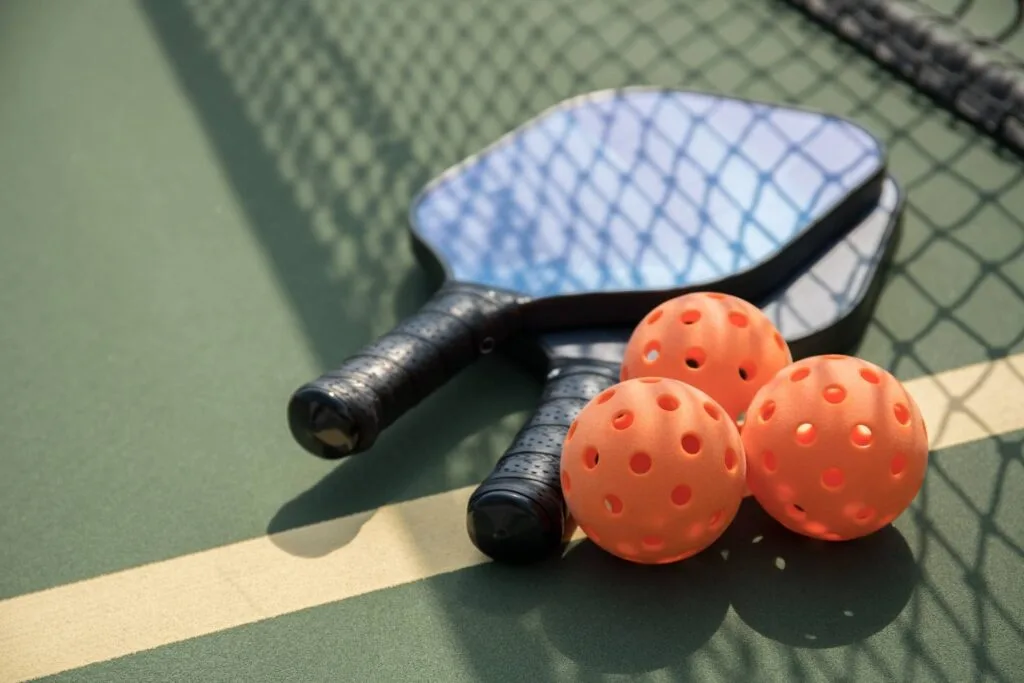
“Hidden Costs”: Whose Success Are You Paying For?
This portion of the money is what we often call “brand tax.” It doesn’t improve the performance of your paddle; instead, it becomes the brand’s marketing expense.
Marketing: The huge billboards, TV commercials, ubiquitous online promotions, and tournament sponsorships you see all represent significant expenses. Brands need to build brand awareness through these methods, and these costs are ultimately passed on to the price of the paddle you purchase.
Pro Contracts: The million-dollar signing fees for top Pickleball players are a significant part of the brand’s premium pricing. When you buy the same paddle as Ben Johns, a portion of your payment goes towards Ben Johns’ endorsement fee. This is understandable, but you need to understand that this money doesn’t make the paddle any better.
Middlemen’s Profits: In traditional sales models, brand owners, distributors, and retailers all add a markup. Each level wants to make a profit, resulting in the final selling price far exceeding the manufacturing cost.
In conclusion, when buying from big brands, you’re essentially sponsoring their marketing campaigns, celebrity endorsements, and complex sales chains, rather than paying purely for the performance of the equipment. Choosing DTC (Direct-to-Consumer) brands is truly spending your money on gear, because they eliminate intermediaries and bring high-quality products directly to you at more reasonable prices.
The law of diminishing marginal utility: the “sweet spot” of performance and price.
Imagine if we plotted a curve between the performance improvement of a paddle and the price you invest; you would find that it does not grow linearly, but rather exhibits a trend of “diminishing marginal returns“.
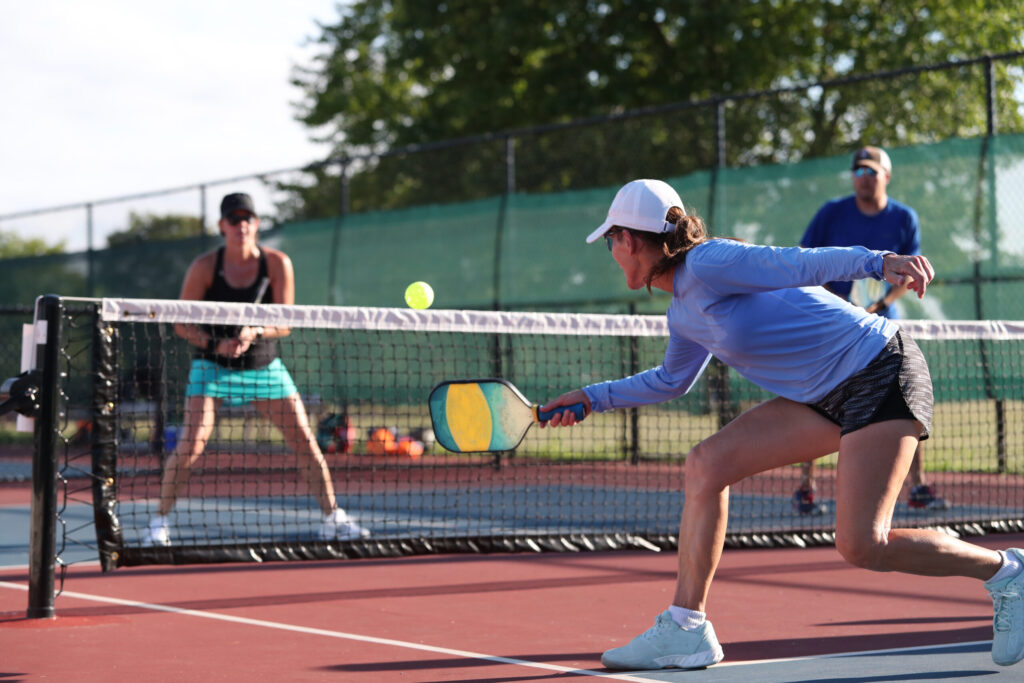
Level 1 ($30 -> $80): A Huge Leap in Performance (From “Toy” to “Sports Equipment”)
This price increase is revolutionary. You’ll leap from rough wooden or cheap composite paddles to composite paddles with basic performance and a great feel.
Features: You’ll experience better feel, a larger forgiving sweet spot, more balanced ball feedback, and more reliable durability.
My findings: I’ve discovered that for beginners, upgrading from a $30 entry-level paddle to a composite paddle around $80 results in an exponential increase in consistency and enjoyment. The return on this investment is enormous, transforming pickleball from a “casual game” into a genuine sport.
Level 2 ($80 -> $150): A beneficial upgrade, but the improvement needs to be perceived
(Benefiting mid-to-high-level players, but difficult for beginners to perceive)
In this range, you will encounter some more advanced technologies and more precise manufacturing processes.
Technological upgrades: For example, thermoformed structures can enhance the overall strength and consistency of the paddle; more refined surface textures or rougher coatings help enhance the spin of the ball; and optimized polymer honeycomb cores can provide a more inclusive feel, increasing power without sacrificing control.
Impact: These paddles offer a more refined feel, slightly increased spin, and a better balance of control and power.
For intermediate players, paddles in this range offer more precise feedback and greater spin potential, but for beginners, these subtle differences may be difficult to perceive. You might need to reach a level of 3.5-4.0 to truly experience the benefits of these upgrades.
Level 3 ($150 -> $250+): Pure brand premium and extremely minor performance improvement
(1% improvement for a 200% price difference)
At this price point, performance improvements become negligible. The extra $100-$150 you pay is likely only for the following:
Brand effect: Paying for brand awareness and reputation.
Exterior Design: A more stylish and unique paint job and appearance.
Minor technical optimizations: perhaps stricter quality control, or some micro-performance improvements that can only be reflected in laboratory data, are almost imperceptible to the average player.
Key takeaway: At this stage, the performance improvement you gain from the extra money you pay might only be 1% or even less, while the price more than doubles. Is it really worth it?
Technique is the only thing that matters: the paddle is just a tool, you are the core.
“Let me be honest: a top-level 5.0 player, even with a regular frying pan, can easily beat a 3.0 beginner with a $250 top-of-the-line paddle.”
This is a true reflection of what I’ve seen countless times on the Pickleball court. No matter how good the paddle is, it’s just a tool. Your technique, footwork, strategy, and reaction speed are the keys to victory.
Swing Weight: A heavier swing weight provides greater power and stability, but sacrifices maneuverability. A lighter swing weight helps with faster reaction and better control.
Grip Size: It must be matched to the player’s hand size. A grip that is too large will affect control, while a grip that is too small may cause wrist strain.
Edge Guard: The protective strip along the edge of the paddle is crucial for its durability, especially in outdoor matches.
These parameters are important, but their effectiveness depends on your solid technical foundation.
My experience: I’ve seen too many players invest heavily in equipment but neglect the most fundamental practice. From my teaching experience, an hour of professional instruction brings far more progress than an expensive paddle.
My suggestion: Instead of spending $250 on a paddle you might not be able to fully handle, spend $80-$100 on a high-performance, well-rounded paddle, and invest the remaining $150-$170 in:
Professional coaching courses: Learn the correct grip, hitting posture, serving and volleying techniques.
Venue rental: Get more involved on the field and gain experience through real-world practice.
High-quality training balls: make your practice more efficient.
This is the real shortcut to improving Pickleball skills, and also the smartest way to invest.
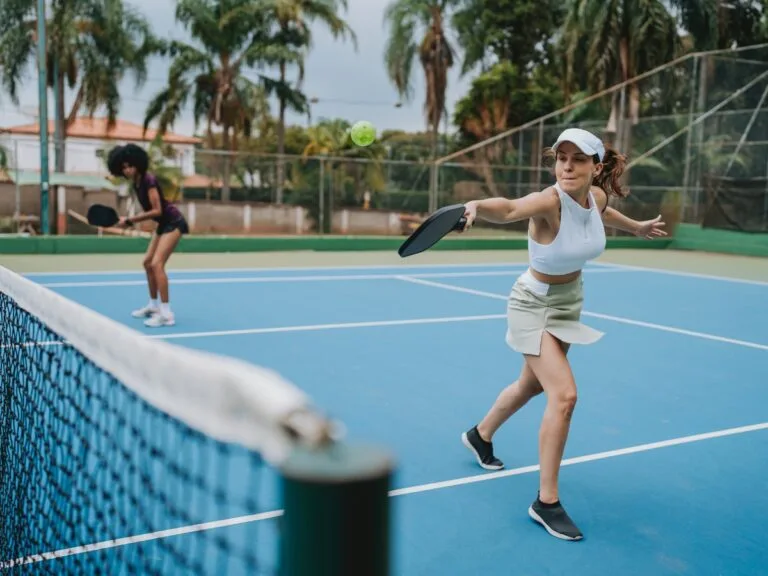
When is it appropriate to buy an expensive item?
So, should everyone avoid expensive paddles? Of course not. An expensive paddle is only “worth it” if the following conditions are met:
You are a 4.5+ level competitive player: You can consistently perceive and utilize the subtle 1% differences between paddles, such as the impact of Swing Weight and Twist Weight (a measure of paddle stability during eccentric hitting) on shot consistency and speed. You have extremely high demands for paddle control, power output, and spin, and can optimize your competitive performance through fine-tuning your equipment.
You have a sponsor to cover the cost: the brand covers the cost of your equipment, so price is not an issue for you.
Money is just a number to you: buying expensive paddles gives you psychological satisfaction without affecting your financial situation.
Otherwise, for the vast majority of players (95%), a mid-range high-performance paddle is perfectly adequate to accompany you from beginner to 4.0 level or even higher. Remember, price range does not necessarily reflect quality. Players should choose paddles based on their personal playing style, not just on price.
Jason’s ultimate advice: Be a Savvy Shopper!
As your friend and expert on pickleball, my core message today is very clear:
Be a smart buyer!
Your goal should be “get the best performance for the least amount of money,” not paying for logos and brand stories. Look for DTC brands that use top-tier materials (like T700 Raw Carbon Fiber and 16mm Polymer Core) without exorbitant brand premiums. They often offer performance comparable to big brands, but at a much more reasonable price.
Surface textures (such as matte or rough coatings) help enhance the paddle’s spin, while the polymer honeycomb core is more inclusive, helping to improve “elasticity” and increase power on the shot without sacrificing control. These are all excellent features you can find in mid-range paddles.
Ready to find the perfect high-performance racket for you? Looking for a racket that performs like a $200+ brand racket but costs less than half the price? Check out our [ Performance Series (Under $100) ] to make every penny count and help you win easily!
Remember, what truly wins you on the court is your sweat and skill, not the price tag on your racket. Let’s make the smartest choices and enjoy the fun of peakball together!

About Jason Simmons
Jason S. Simmons has been obsessively dissecting racket sports equipment for over a decade. After transitioning from competitive tennis to Pickleball in 2020, Jason realized the market was flooded with confusing marketing jargon and overpriced gear.
His Mission: To help players—especially seniors and those recovering from Lateral Epicondylitis (Tennis Elbow)—find the perfect paddle setup that balances power, control, and health.
Why Trust Jason?
- Material Science Geek: He doesn't just play; he analyzes. From the weave patterns of Toray T700 Raw Carbon Fiber to the density of Polypropylene Honeycomb Cores, Jason understands the physics behind the "pop."
- Data-Driven Testing: Jason has play-tested over 50+ models, evaluating them on Swing Weight, Twist Weight, and Dwell Time rather than just subjective "feel."
- On the Court: Based in the US, Jason actively competes in regional 4.5+ level leagues. When he isn't drilling his third-shot drops, he is likely inspecting paddles for Core Crushing or Delamination issues.
Jason believes that "A dead paddle kills your game," and is dedicated to teaching players how to maintain their grit surface for peak performance.
View all posts by Jason Simmons