Amazon’s $30 “Beginner’s Kit” Trap: Why It’s Ruining Your Game (and Your Elbows)
Hey friend! Have you recently started playing pickleball and fallen in love with this vibrant sport? You might be looking for a beginner’s kit on Amazon, and seeing those sets that say “2 rackets + 4 balls + 1 bag for only $29.99” makes you feel like you’ve struck gold, right?
Don’t rush to order!
pickleballAs an expert who has thoroughly researched and personally tested hundreds of Pickleball rackets, I have to warn you like an old friend: this seemingly great value $30 set could very well be a classic “buy cheap, use expensive” trap.
pickleball elbow.”Not only could it hinder your skill improvement, but worse, it could also cause unnecessary sports injuries, such as the annoying “Pickleball Elbow.” Today, I’ll reveal the secrets behind these inexpensive sets.
The truth about materials: What did you actually buy?
When we talk about rackets, the materials are key. What high-tech features do you think you can get for those $30 kits?
Wood or inferior composite materials: as hard as bricks
pickleballMost inexpensive rackets are made primarily of wood or extremely cheap fiberglass composites. The most notable characteristic of these materials is their rigidity! They lack the shock absorption and energy conduction properties essential for modern Pickleball rackets.
Hidden danger: The impact will reach your elbow.
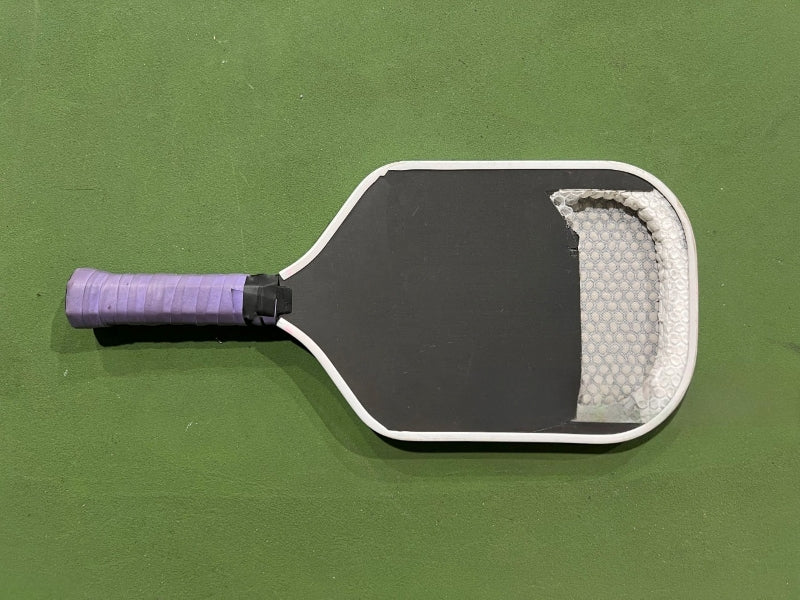
What’s the problem? The core of these rackets is usually solid or low-density foam, without any honeycomb core cushioning structure. This means that the impact of each shot is 100% transmitted directly to your wrist and elbow, or even amplified.
pickleball elbow.”Think about it: every time you swing your racket, the moment the ball contacts the racket face, all the vibration and reaction force rushes towards your joints without reservation. Over time, how can your elbows and wrists not protest? This is one of the common causes of “Pickleball Elbow.”
Comparison:
16 mmHigh-quality rackets feature a polymer honeycomb core: like a shock-absorbing sponge, it effectively absorbs vibrations upon impact and distributes energy evenly. This polymer honeycomb core is more inclusive, helping to improve “elasticity” and increase the power of the shot without sacrificing control. In my tests, using a racket with a 16mm thick polymer core resulted in a noticeably softer feel and significantly reduced arm fatigue.
vibrations, butCheap, rigid cores are more like “vibration conductors.” Not only do they fail to effectively dampen vibrations, they may even amplify them, putting unnecessary stress on your elbows.
“Frosted” Scam: Why Can’t You Get Spin?
One of the joys of pickleball is controlling the ball’s landing point and trajectory through spin. But if you’re using a cheap $30 racket, you’ll probably never get any decent spin.
Spray-painted sandblasted surface: A fleeting phenomenon of “friction”
Most cheap rackets use sandblasted paint sprayed onto a smooth surface. This sprayed sandblasted finish may look like it has some friction, but how does it actually perform in use?
Consequence: After two weeks of use, it turned into a plastic board.
Unsurprisingly, after two or three weeks, or even less, this thin layer of sandblasted paint will be completely worn away by the ball, and your racket face will quickly become a smooth plastic blade.
When the racket face is as smooth as a mirror, do you still want to learn sidespin or topspin? Absolutely not! The ball simply won’t stay on the racket face; it will only slip, leaving you frustrated.
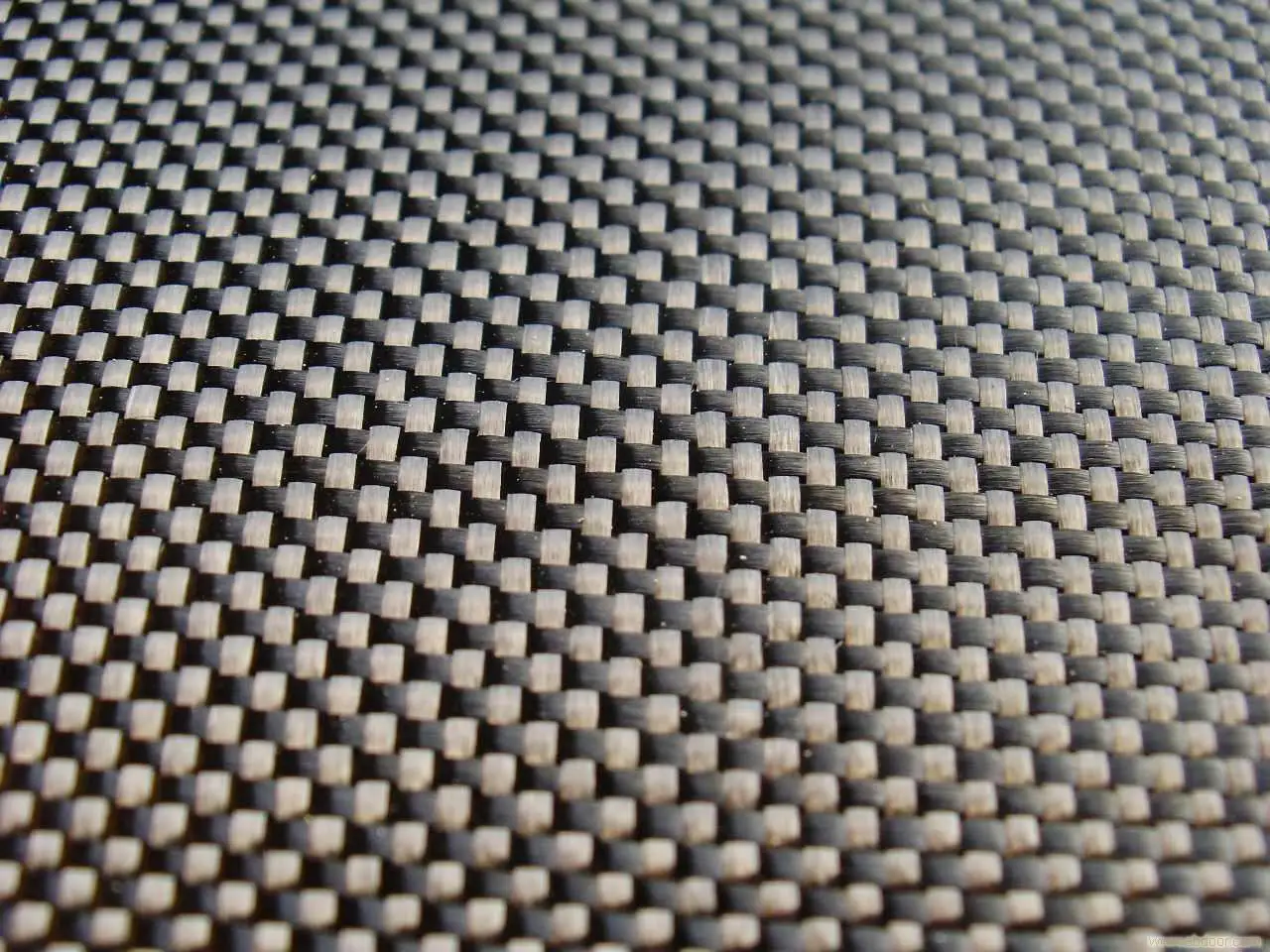
Solution: T700 Raw Carbon Fiber surface
What truly provides sustained spin is a raw carbon fiber racket face, especially T700 Raw Carbon Fiber. The texture of this face is inherent to the material itself, not a sprayed coating. It has a natural roughness that firmly “grips” the ball, allowing you to easily generate various spins, and it never wears out. This is key to improving your ball control and tactical options.
The Nightmare of “Dead Spot”: Making You Doubt Your Skills
Have you ever had this experience: you feel like you hit the center of the racket, but the ball falls weakly and limply in front of the net like a deflated balloon? This is very likely due to the “dead spot” of a cheap racket.
Uneven core material density: a fatal flaw
fly,Uneven core density is a common problem in cheap rackets. This means the internal structure of the racket is inconsistent; some areas are elastic, while others are like a wall. When you hit an elastic area, the ball will still fly; but if you miss even slightly and hit the “dead spot,” the racket’s feedback becomes very poor, the ball speed drops sharply, and there is almost no rebound.
Frustration: Blaming oneself and damaging self-confidence
an inaccurateThis inconsistency can severely damage a beginner’s confidence. You might think it’s due to poor technique or inaccurate hitting point, but actually, the problem lies with the racket itself.
I’ve seen many beginners frustrated by the racket’s dead spot; they put in the effort but didn’t get the feedback they deserved, eventually even losing interest in pickleball.
The sweet spot is related to the thickness of the racket; thicker rackets usually have a larger sweet spot, meaning you can get a good shot even if you don’t hit the exact center of the racket. Cheap rackets are usually very thin, with a pitifully small sweet spot.
The Real Cost: Equipment vs. Medical Expenses
Now, let’s do the math and see just how “expensive” this $30 “cheap” item really is:
| Project | Cheap $30 Amazon Set | High-quality Entry-level |
|---|---|---|
| Initial investment | $30 (includes 2 rackets, Pickleballs, and a bag) | $60 – $80 (single racket) |
| Racket lifespan | Performance drops rapidly within a few months. | Stable performance for 2-3 years |
| Elbow/Wrist Health | High risk | Low risk (protects joints) |
| Additional expenses | Brace ($20) + PT ($100/session) + Pain relief cream | None or very few |
| Total value | Negative experiences & physical damage. | Positive experience & health benefits. |
Look, a single physical therapy session can cost as much as $100, while a good entry-level racket might only cost $60-$80. Your first pickleball racket shouldn’t be a toy. It should be a tool for improving your skills and enjoying the sport, not a source of injury.
Swing weight is key to determining the feel of a racket. A heavier swing weight provides more power, while a lighter swing weight helps with faster reaction and better control. Cheap rackets often have an unbalanced weight distribution, resulting in an excessively heavy or light swing weight, which increases the burden on the wrist and elbow.
Conclusion: It’s time for an upgrade!
If you’ve read this far, I believe you now understand the real “trap” of the $30 Amazon Starter Kit. Not only will it hinder your technological progress, but more importantly, it may come at the cost of your health.
Pickleball is a wonderful sport and deserves to be enjoyed with the right equipment. You don’t need to invest $250 in a top-of-the-line professional racket right away, but at the very least, choose a racket that truly protects your elbows and provides good feel and spin.
Ready to say goodbye to the cheap trap?
Looking for a racket that will last 3 years, protect your elbows, and still generate spin? Check out our Best Value T700 series.

About Jason Simmons
Jason S. Simmons has been obsessively dissecting racket sports equipment for over a decade. After transitioning from competitive tennis to Pickleball in 2020, Jason realized the market was flooded with confusing marketing jargon and overpriced gear.
His Mission: To help players—especially seniors and those recovering from Lateral Epicondylitis (Tennis Elbow)—find the perfect paddle setup that balances power, control, and health.
Why Trust Jason?
- Material Science Geek: He doesn't just play; he analyzes. From the weave patterns of Toray T700 Raw Carbon Fiber to the density of Polypropylene Honeycomb Cores, Jason understands the physics behind the "pop."
- Data-Driven Testing: Jason has play-tested over 50+ models, evaluating them on Swing Weight, Twist Weight, and Dwell Time rather than just subjective "feel."
- On the Court: Based in the US, Jason actively competes in regional 4.5+ level leagues. When he isn't drilling his third-shot drops, he is likely inspecting paddles for Core Crushing or Delamination issues.
Jason believes that "A dead paddle kills your game," and is dedicated to teaching players how to maintain their grit surface for peak performance.
View all posts by Jason Simmons