Suspended! Why that “cool” Pickleball paddle might be against the rules (and could get you kicked off the court).
Hey fellow pickleball players! Imagine this scenario: You excitedly arrive at the court with a pickleball paddle that you saw online and thought looked incredibly “cool,” expecting to dominate and impress your opponents. But just as you’re about to start playing, an experienced player points at your paddle, a hint of confusion and regret in their voice, and says, “Hey friend, this paddle isn’t allowed here.”
pickleballThe awkwardness of that moment, isn’t it like bringing a sniper rifle to an archery competition? While pickleball has a low barrier to entry and is easy to learn, its physical limitations on equipment are very strict. Buying the wrong paddle can not only lead to a violation in a competition, but it can even be considered “cheating” in a casual game—a truly unpleasant experience. As a seasoned Pickleball equipment expert, I’ve personally witnessed players bring a “cool-looking” paddle to the court because they didn’t understand the rules, only to be politely asked to leave the game—that embarrassment I still remember vividly. Today, let’s talk about those “danger zones” you might inadvertently step into, helping you avoid those “illegal” paddles.
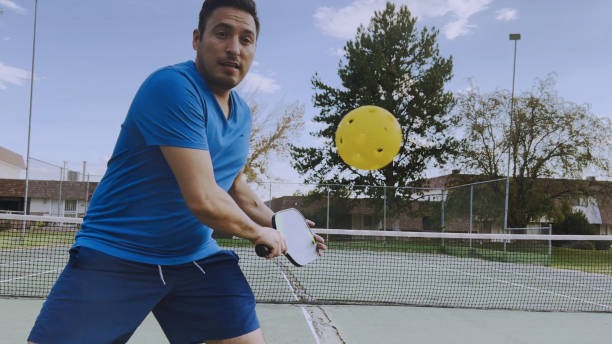
I. Trap One: That “Sandpaper-like” Surface
You may have seen some paddles with a particularly rough surface, like sandpaper, or advertised as providing “unbeatable spin.” Sounds tempting, right?
Principles and Rules
Some early or inexpensive paddles, in pursuit of maximum spin, have excessively textured surfaces, making them feel like 80-grit sandpaper. While this can indeed generate amazing spin in the short term, the USAPA (USA Pickleball Association) has strict limits on paddle surface roughness. According to regulations, the surface roughness of a paddle must not average more than 30 micrometers (µm) on the Rz reading (average maximum height, peak to trough) and must not average more than 40 micrometers (µm) on the Rt reading (maximum height, peak to trough). Excessive roughness produces unnatural spin, which is considered a violation of fair play.
Consequences and Correct Solution
While this “sandpaper” paddle may offer unparalleled spin for a time, it will quickly be considered cheating. More importantly, this sandblasted coating is often short-lived and wears off rapidly, significantly reducing the paddle’s performance.
So, what’s the best choice for achieving both compliant and sustained spin? The answer is T700 Raw Carbon Fiber paddles. Instead of being coated with “sandpaper” particles, they utilize the unique texture of the carbon fiber itself to generate compliant and durable friction, resulting in superior spin control. This is currently the market’s recognized solution that both complies with regulations and delivers excellent spin performance.
II. Trap Two: EVA Foam Core (The Secret of “Silent Beat”)
Have you ever heard of paddles that are particularly “quiet,” have a very soft feel when hitting the ball, or have an astonishingly fast ball speed? This is likely related to the paddle’s internal core material, such as EVA foam.
What is EVA foam?
EVA foam is a material similar to that used in running shoe soles. It is typically soft and has excellent shock absorption and cushioning properties, which is why some paddle manufacturers use it to create so-called “silent paddles.” It significantly reduces noise during impact while providing a very bouncy feel.
Problems and Current Situation: The Trampoline Effect
This “bouncy” quality is precisely what causes the problem. EVA foam paddles have an exit velocity far exceeding USAPA standards, creating a noticeable “trampoline effect.” This means that even a light touch can send the ball flying very fast, which not only affects the fairness of the game but may also increase the risk of injury due to the excessively high ball speed.
certified andCurrently, almost all pickleball paddles using EVA foam cores are not USAPA certified, and therefore are not permitted in any official tournaments or most serious recreational games (of course, there may be exceptions for some specific recreational events).
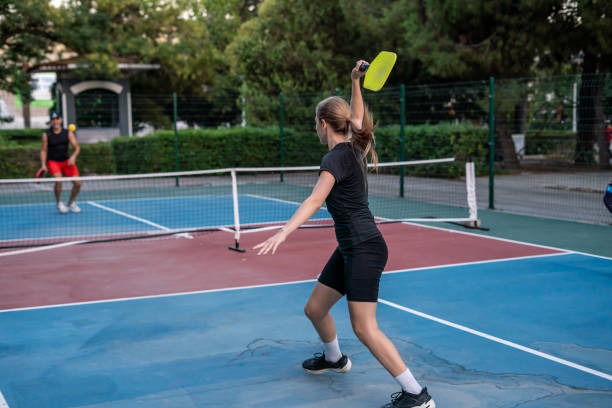
Why is it not recommended to use it for practice?
Warning: Never buy EVA foam paddles to practice your technique! In my testing, some EVA core paddles do offer amazing power, but that “effortless” feel will completely disrupt your understanding of ball control and power output over time. You’ll develop the bad habit of the ball flying away with the slightest touch, and once you switch back to proper USAPA-approved pickleball paddles, you’ll find yourself completely unable to hit the ball—your feel for it is ruined. It’s like practicing swordsmanship with a switchblade; ultimately, you won’t master the real technique.
III. Trap Three: The “Swiss Cheese” Design (Randomly Included Holes)
To improve aerodynamics or reduce weight, some paddles incorporate design features such as perforations. However, the placement and arrangement of these perforations are quite significant.
Rules and Violations
For paddles like the Selkirk Power Air, aerodynamic holes located in the throat or edge are perfectly compliant and can indeed provide some advantages. However, holes in the hitting surface are absolutely illegal. I’ve seen some counterfeit paddles with holes in the hitting surface in the middle of the paddle for “gimmicky” purposes or to achieve so-called “lightweight” performance, which is explicitly prohibited by USAPA rules. Any hole in the hitting surface alters the paddle’s hitting characteristics and is considered an unfair advantage.
appearance.”IV. Delamination Dangers: Even a legitimate paddle can “change its appearance”.
We’ve been talking about paddles that are “illegal” from the factory. But did you know that even if you buy a strictly USAPA-approved pickleball paddle, it could become “illegal” after a period of use due to damage?
What is delamination?
Delamination refers to the separation of the surface layer and the inner core layer of a paddle. When delamination occurs, the paddle’s striking surface becomes like a “trampoline,” significantly increasing the ball’s speed and elasticity, creating a “trampoline effect” similar to that of an EVA foam core. This change gives players an unfair advantage; therefore, once a paddle is delaminated, it becomes an “illegal paddle” under the rules.
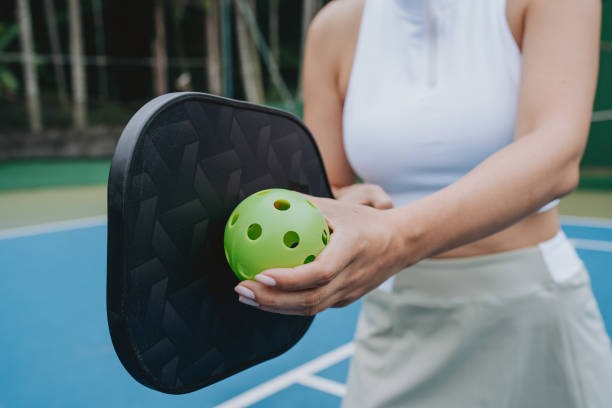
How to judge and make suggestions
Delamination is usually difficult to see with the naked eye, but you can identify it by the following signs:
|
Phenomenon characteristics |
Normal paddle performance |
Delaminated paddle performance |
|
Sound of hitting the ball |
A crisp, solid sound, or one that has a unique sound depending on the core material. |
It becomes hollow and hoarse, like striking an empty drum, or makes strange noises. |
|
Feel of hitting the ball |
Stable and controllable, you can feel the ball’s feedback. |
It became unusually bouncy, as if the paddle wasn’t “biting” the ball, and the ball was released too quickly. |
|
Paddle surface |
Flat, without obvious bumps or depressions |
Slight bulges or unevenness may occur. |
If you notice a change in the sound of your paddle when hitting the ball, or if you feel an abnormal elasticity in your paddle, please replace it immediately. Continuing to use a delaminated paddle is not only against the rules, but it may also affect your hitting feel and technical development.
V. Why you should care about these rules (even in casual games)
pickleballYou might think, “I’m not going to play professionally, so why should I care if it’s compliant or not?” But believe me, paying attention to these rules is crucial to your Pickleball career.
Fair play spirit: Pickleball is a gentleman’s sport. Winning with unauthorized equipment is dishonorable, and most clubs and communities tacitly adhere to USAPA rules. Using an unauthorized paddle is considered disrespectful to your opponent.
The cornerstone of skill improvement: Relying on the “superpowers” provided by non-compliant equipment will hinder your true skill development. You may think you have great power and spin, but that’s just thanks to the paddle. Once you switch back to a proper paddle, you’ll find your technique stagnant or even regressing. I once met a fellow player who used a high-elasticity, non-compliant paddle for over a year. When he switched to my compliant paddle, he couldn’t adapt at all; he lost all feel for the ball and had to readjust his power generation pattern.
The value retention of paddles: Illegal paddles are worthless; nobody will want them on the secondhand market. Your investment may be lost.
VI. Summary and Recommendations
So, the next time you’re preparing to buy a new paddle or have questions about your existing one, be sure to look for the “USAPA Approved” mark or carefully check whether its manufacturing specifications meet USAPA standards. This will not only give you peace of mind on the court but also help you truly improve your skills.
Ready to find the perfect, fully compliant, match-grade paddle that offers both spin and control? Check out our [Tournament Ready Series], all strictly compliant with USAPA specifications, giving you confidence on the court!

About Jason Simmons
Jason S. Simmons has been obsessively dissecting racket sports equipment for over a decade. After transitioning from competitive tennis to Pickleball in 2020, Jason realized the market was flooded with confusing marketing jargon and overpriced gear.
His Mission: To help players—especially seniors and those recovering from Lateral Epicondylitis (Tennis Elbow)—find the perfect paddle setup that balances power, control, and health.
Why Trust Jason?
- Material Science Geek: He doesn't just play; he analyzes. From the weave patterns of Toray T700 Raw Carbon Fiber to the density of Polypropylene Honeycomb Cores, Jason understands the physics behind the "pop."
- Data-Driven Testing: Jason has play-tested over 50+ models, evaluating them on Swing Weight, Twist Weight, and Dwell Time rather than just subjective "feel."
- On the Court: Based in the US, Jason actively competes in regional 4.5+ level leagues. When he isn't drilling his third-shot drops, he is likely inspecting paddles for Core Crushing or Delamination issues.
Jason believes that "A dead paddle kills your game," and is dedicated to teaching players how to maintain their grit surface for peak performance.
View all posts by Jason Simmons