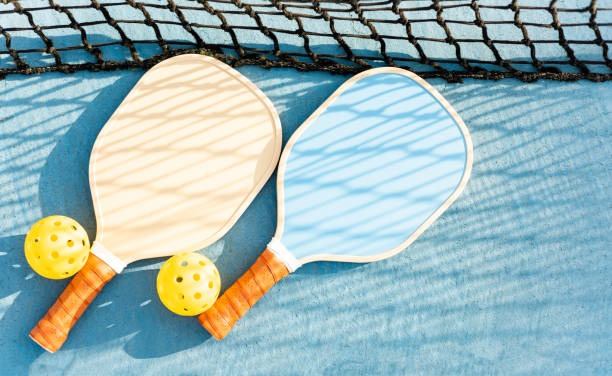
Stop! 3 common cleaning mistakes that ruin Pickleball Paddles (Put down that glass cleaner!)
As a seasoned pickleball equipment expert, I’ve seen too many players shorten the lifespan of their beloved paddles, or even destroy them, by doing more harm than good.
Your paddle is covered in sweat or dirt or simply doesn’t look as shiny as it used to be. You might instinctively grab your Windex (glass cleaner), alcohol, or even Mr. Clean Magic Eraser, ready to give it a thorough cleaning.
Stop right now! Your intentions are good, but these common cleaning methods, especially for high-performance raw carbon fiber paddles, are tantamount to “murder.”
For these paddles, “less is more” is the true maintenance philosophy. Today, I’ll expose three of the most common cleaning mistakes, tell you why they ruin your paddle, and explain the only safe and effective cleaning method.
Avoid Mistake #1: Drowning Your Paddle—The Dangers of Washing/Soaking
Myth: Many pickleball players believe that when a paddle gets dirty, it’s like washing dishes—just rinse it under the tap or wipe it with plenty of water. After all, water is the most natural cleaning agent, right?
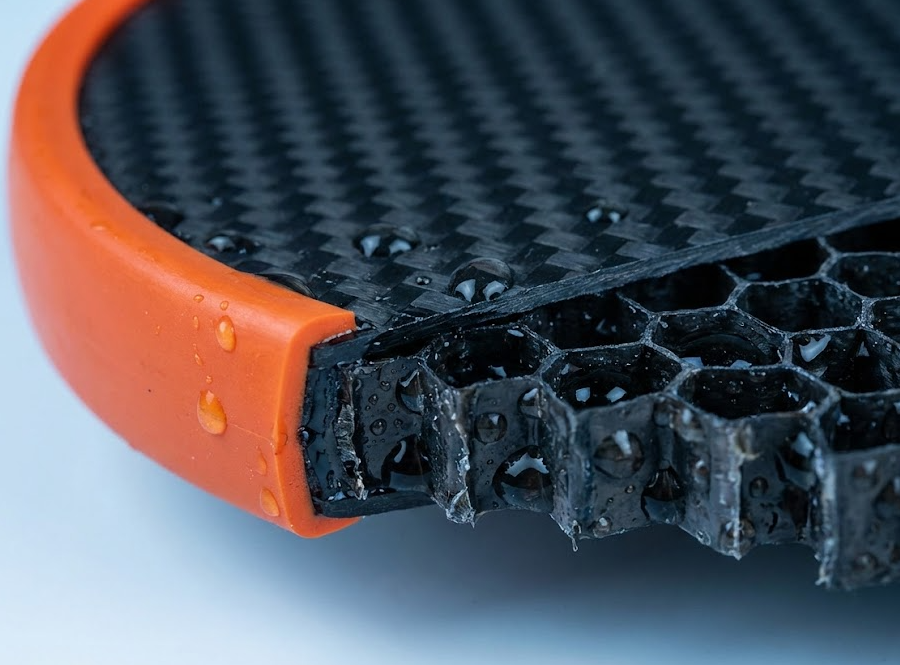
The truth: Pickleball paddles are not completely sealed. Their polymer honeycomb core is filled with tiny gaps, and the edge guard is simply glued on; it’s not a fully waterproof seal.
This means that when you rinse or soak the paddle with plenty of water, water can seep silently into the honeycomb structure inside the paddle through the gaps in the edge guard.
Consequences: The consequences of this kind of “overindulgence” are disastrous and often irreversible.
- Weight gain and balance disruption: Once water gets inside the paddle, it gets trapped in the honeycomb structure and is difficult to evaporate on its own. I once tested a paddle that had been excessively washed, and it gained nearly 20 grams in weight, which completely altered the paddle’s swing weight and balance point. Imagine your carefully chosen paddle suddenly becoming heavy and sluggish, with no feel whatsoever.
- Mold and Odor: The damp interior environment, combined with the high temperatures commonly found in paddle bags or car trunks, creates a breeding ground for mold. Mold inside the paddle not only produces an unpleasant odor but also further corrodes and degrades the core polymer material.
- “Dead spots” and performance degradation: Moisture inside the honeycomb core material makes it brittle and can even cause localized collapse, creating “dead spots” during impact. This means the paddle’s feedback is no longer uniform, the sweet spot shrinks, and power and control are significantly reduced. In my opinion, this is practically a slow murder of the paddle’s performance.
—HouseholdAvoid Mistake #2: Chemical Corrosion – Household Cleaners are “Poison”
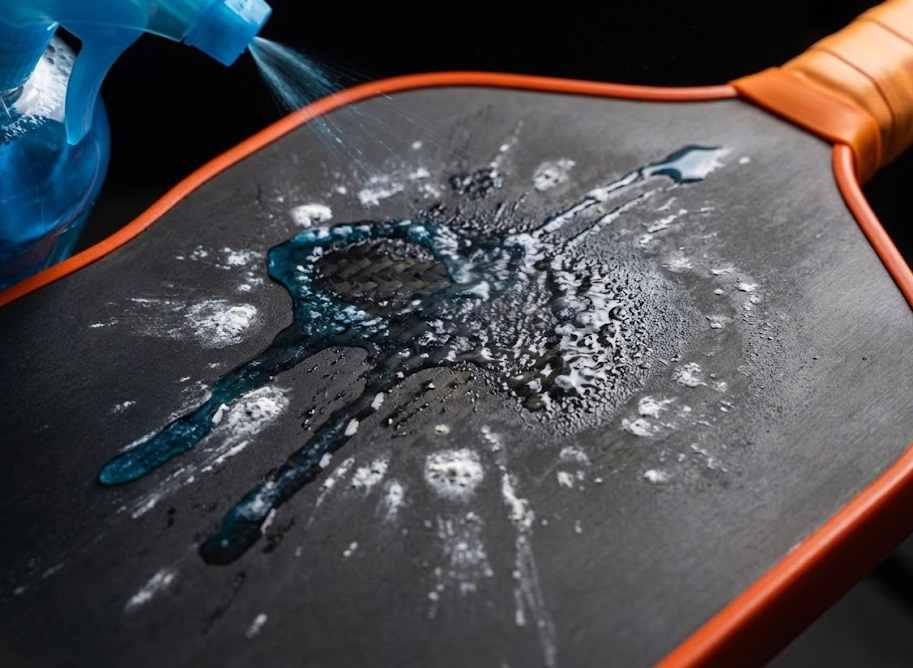
Myth: “If water doesn’t work, surely I can use stronger chemical cleaners, like windshield washer fluid, alcohol, disinfectant, or even kitchen degreaser!”
pickleballThe truth is: Modern high-performance Pickleball paddles, especially carbon fiber paddles, are not made of simple plastic. The carbon fiber fabric is cured and bonded to the paddle core using epoxy resin. Epoxy resin is a polymer that is highly sensitive to strong chemical solvents.
Consequences: By using these chemical cleaners, you are personally dismantling the protective layer on the surface of your paddle and the adhesive inside.
- feel andSticky and white surface: Strong solvents will begin to decompose the epoxy resin, causing the paddle surface to become sticky and have an odd feel, and may even leave white spots that are difficult to remove.
- Delamination: In the most serious case, chemicals can erode the epoxy resin adhesive layer between the carbon fiber cloth and the core, causing delamination on the paddle surface. Once delamination occurs, the paddle’s structural integrity is compromised, resulting in abnormal noises during shots, complete loss of performance, and rendering the paddle unusable.
- Clogged pores, reduced friction: Even seemingly harmless cleaning agents can leave residues that clog the microscopic texture and pores of the carbon fiber surface, which are crucial for providing spin capability. Cleaning agent residue can smooth the paddle surface, reducing friction and decreasing your ability to generate topspin or sidespin.
IsAvoid Mistake #3: Physical Abrasion—Magic Eraser” is the Killer of Your Paddle
Myth: “Stubborn stains on my paddle can’t be removed with a regular cloth, but surely Mr. Clean Magic Eraser (melamine sponge) can do the trick? It’s effective against all kinds of stains!”
The truth: Many people don’t know that the so-called “magic eraser” is not an ordinary cleaning sponge. It’s essentially ultra-fine melamine foam. Under a microscope, its structure resembles countless tiny glass fibers; in other words, it’s a type of ultra-fine sandpaper. It “cleans” stains through physical abrasion, not chemical dissolution.
Consequences: You can indeed use the magic eraser to remove the dirt, but the price is irreversible:
- Smoothing the texture, losing spin: Especially for paddles like the T700 Raw Carbon, which are marketed for their friction and spin, the unique rough texture of their surface is key to their high spin performance. Using a magic eraser, you’re manually smoothing out these precious textures, making the surface glossy. I’ve seen paddles lose almost all their spin after being “cleaned” with a magic eraser; it’s like turning a high-performance carbon fiber paddle into a smooth plastic blade. This isn’t just a loss of performance; it’s a destruction of the core technology of the paddle.
- Accelerated wear and tear, shortened lifespan: This physical abrasion will accelerate the wear and tear on the paddle surface, reduce its durability, and force your paddle into “retirement” prematurely.
The only safe and effective cleaning method
So, what should we do when faced with a dirty paddle? As an expert who has tested various paddles extensively, I’ve summarized the following points as the golden rules for ensuring the safe and effective cleaning of your paddle:
For ball marks and minor stains: Use a professional Paddle Eraser.
For common ball marks or shallow stains on paddle surfaces, the safest and most effective method is to use a professional Paddle Eraser (Rubber Cleaner). This tool is specifically designed for cleaning paddle surfaces; it removes stains through friction without damaging the paddle’s texture. This is safer than any chemical agents or abrasive tools.
For sweat and dirt: slightly damp microfiber cloth
If your paddle gets sweaty or has a little dirt on it, use a slightly damp microfiber cloth.
Key point: Only wet the cloth with clean water, then wring it out thoroughly to ensure the cloth is no longer dripping.
Instructions: Gently wipe the surface of the paddle to remove stains. After wiping, immediately dry the paddle with a dry microfiber cloth. Ensure there is no moisture remaining on the paddle surface. Remember, it’s better to wipe it several times than to over-dampen the paddle.
overgripGrip cleaning: Replace the Overgrip directly.
Grips are consumables. They absorb hand sweat, oil, and dust, becoming slippery and dirty over time. Instead of trying to clean the main grip (which can damage its material or stickiness), replace the overgrip regularly. This is the most economical and hygienic option.
In my experience, frequently replacing the overgrip not only keeps the grip clean and provides a good grip but also effectively extends the life of the main grip.
Conclusions and Recommendations
Treat your pickleball carbon fiber paddle like a valuable work of art, not like a piece of flooring to be washed carelessly. Its intricate internal structure and unique surface texture are key to your performance on the court.
Incorrect cleaning methods will not only affect paddle performance but also significantly shorten its lifespan.
Now that you’ve mastered the secrets of proper paddle maintenance, it’s time to upgrade to a high-quality paddle that deserves your careful care.
Our [T700 Raw Carbon Series] paddles are renowned for their exceptional durability and outstanding spin performance. They not only withstand intense matches but also, with proper care, provide you with a lasting competitive advantage.
Ready to experience top-tier performance? Explore our recommended T700 Raw Carbon Series paddles and let every shot be filled with confidence!

About Jason Simmons
Jason S. Simmons has been obsessively dissecting racket sports equipment for over a decade. After transitioning from competitive tennis to Pickleball in 2020, Jason realized the market was flooded with confusing marketing jargon and overpriced gear.
His Mission: To help players—especially seniors and those recovering from Lateral Epicondylitis (Tennis Elbow)—find the perfect paddle setup that balances power, control, and health.
Why Trust Jason?
- Material Science Geek: He doesn't just play; he analyzes. From the weave patterns of Toray T700 Raw Carbon Fiber to the density of Polypropylene Honeycomb Cores, Jason understands the physics behind the "pop."
- Data-Driven Testing: Jason has play-tested over 50+ models, evaluating them on Swing Weight, Twist Weight, and Dwell Time rather than just subjective "feel."
- On the Court: Based in the US, Jason actively competes in regional 4.5+ level leagues. When he isn't drilling his third-shot drops, he is likely inspecting paddles for Core Crushing or Delamination issues.
Jason believes that "A dead paddle kills your game," and is dedicated to teaching players how to maintain their grit surface for peak performance.
View all posts by Jason Simmons