A complete guide to pickleball for beginners and advanced users: from equipment lists to the selection logic for your first pickleball paddles.
To be honest, every time I see newcomers on the court carrying supermarket plastic rackets or wearing running shoes, I feel quite worried.
It’s not because of my arrogance as a “gear enthusiast,” but because I know all too well that the wrong starting equipment can not only greatly slow down your skill progress but also increase the risk of injury. Pickleball, while an easy sport to pick up, relies on equipment far more than you might imagine.
As an equipment expert with years of experience in the world of pickleball, my mission is to help you cut through the marketing fog. This is not just a list but an in-depth guide on “how to build your court-fighting system.” We’ll start from the basics, telling you why certain expenses are necessary and certain pitfalls must be avoided.
1. Building the Foundation: Besides your racket, these are your “defense towers.”
Before discussing the core Pickleball paddles, we must first align with the equipment that ensures you “can stay safely on the field.”
Pickleball: The Underlying Logic of “Wind Resistance” and “Elasticity”
The most easily overlooked thing for beginners is the difference in the balls. Indoor and outdoor balls should not be switched at will.
- Indoor balls: These typically have larger holes (around 26) and are made of a softer material. In windless conditions, these balls have a more stable flight trajectory and moderate elasticity.
- Outdoor ball: This is a game of physics. Outdoor balls have smaller, denser holes (about 40) to cut off airflow and reduce wind resistance on the ball’s path. They are also made of harder and heavier materials.
My advice: have at least one bucket (3-6) of outdoor balls. Even if you only play indoors, the faster speed of outdoor balls will help you adapt to the competitive pace more quickly.
Professional court shoes: Lateral support is the lifeline
This is the point I want to emphasize most. Please put away your running shoes. Running shoes are designed with a “straightforward” approach, with all the grip focused on the front. But pickleball is a sport full of sudden stops, lateral slides, and crossovers. Wearing running shoes to make lateral cuts on a hard court is practically inviting an ankle sprain.
Underlying logic: Professional court shoes (tennis shoes or pickleball shoes) have obvious reinforcement and anti-rollover design on both sides of the sole, and the rubber of the sole is harder, which can provide lateral friction while protecting the ankle.
Safety goggles: Don’t let accidents end your passions.
In doubles matches, the speed of the ball during four-person net rallies is extremely fast. The probability of the ball unexpectedly bouncing and hitting the eyes is not low. Choosing a pair of anti-fog and impact-resistant goggles not only protects your eyesight but also gives you a sense of psychological security during close-quarters net play.
2. In-depth analysis: How to scientifically choose your first pair of Pickleball Paddles
Choosing a racket isn’t about its appearance but about how its physical parameters match your physical attributes.
A. The “Underlying Truth” of Core Parameters
1. Core Material: Balancing Dynamics and Shock Absorption
Pickleball paddles on the market are almost all polymer honeycomb cores.
Underlying logic: This honeycomb-like structure undergoes microscopic deformation at the moment of impact. It not only absorbs harmful shocks (protecting your elbow), but more importantly, it extends the “dwell time” of the ball on the racket face. For beginners, the longer the dwell time, the greater the room for correction in the ball’s trajectory.
2. Surface material: The coefficient of friction determines the rotational potential.
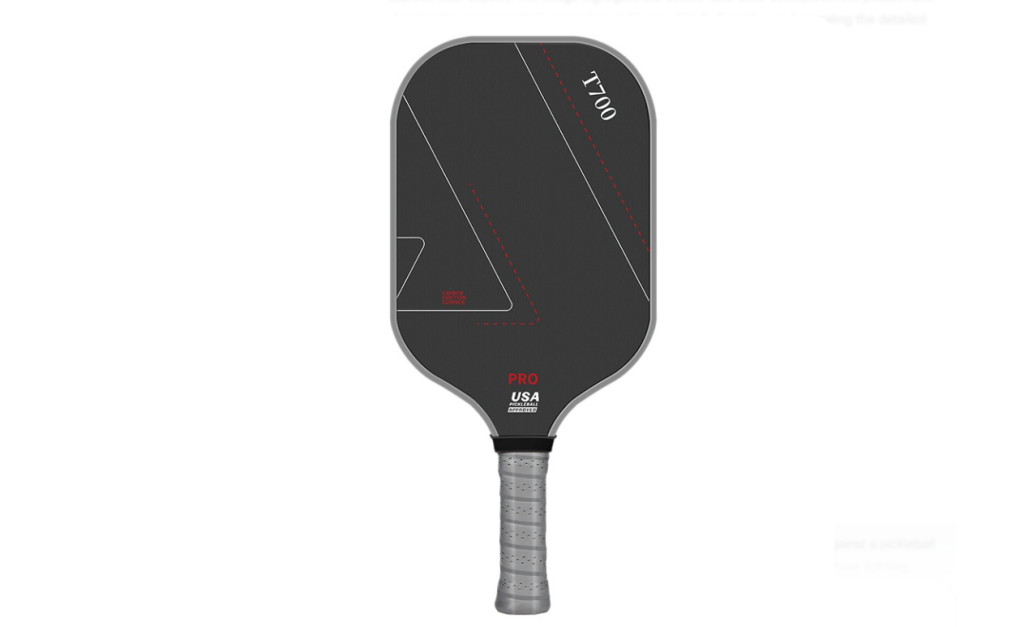
- Carbon fiber, especially the current T700 virgin carbon fiber, has become the industry standard. It provides extremely high surface friction, allowing you to easily generate spin.
- Fiberglass: It is more flexible than carbon fiber. If you feel you lack explosive power, fiberglass pickleball paddles are like a mini trampoline, helping you “boom” the ball further.
3. Weight and thickness: the cornerstone of stability
- Swing Weight: Don’t just look at the static weight. Swing weight determines how much effort you put into swinging the racket. I recommend beginners choose medium swing weight pickleball paddles so that you won’t feel too heavy when reacting at the net, and you won’t feel too light and “floaty” when hitting from the baseline.
- 16mm vs 13mm: My advice to all beginners is to choose 16mm. The increased thickness not only provides shock absorption but also expands the sweet spot.

3. Recommendations for Beginners: My Assessment and Recommendation Logic
Based on my personal testing of hundreds of rackets, I have outlined three selection paths for beginners. You can choose the one that best suits your budget and physical condition:
Path 1: Pursuing the ultimate cost-effectiveness and control
If you are a complete beginner and want to get started with around $50.
- Recommended configuration: polymer core + glass fiber surface.
- Underlying logic: Pickleball paddles with this configuration typically have strong dynamic feedback (pop), which can compensate for the problem of beginners’ improper force application, and the price is also very friendly.
Pathway Two: Balanced and Rapid Progress Approach (Highly Recommended)
If you’ve already played a few rounds and are prepared to commit long-term.
- Recommended configuration: T700 carbon fiber surface + 16 mm thickness.
- Underlying logic: This is a “one-step” configuration. Carbon fiber provides the control and spin you desperately need, while 16 mm of padding protects your joints. These pickleball paddles can accompany you from level 2.0 all the way to level 4.0.
Path 3: Defensive Strategy for Large Sweet Spots
If you feel that your hand-eye coordination is still in the adjustment period and you often miss the ball.
- Recommended configuration: Widebody design.
- Underlying logic: The wide-body design of pickleball paddles shortens the head length and increases the lateral width. This sacrifices a little power but gains a huge margin of error.
4. Equipment Lifecycle: The Inevitability of Maintenance and Upgrading
Buying good pickleball paddles is just the beginning; how you maintain them determines their value.
- Cleaning Logic: The salt in sweat can corrode the microscopic texture of carbon fiber. Developing the habit of wiping the surface after each use is not only for cleanliness but also to maintain that precious friction.
- When should you upgrade? When you find that you can consistently hit the ball to the preset landing point, but the racket’s feedback starts to feel “soft” or lacks spin, it means you’ve exceeded the limits of your beginner racket. At this point, you should consider professional-grade pickleball paddles with a thermoformed process.
5. Summary: Step onto the court with confidence.
Choosing the right equipment is essentially about removing obstacles that interfere with your learning of the technology.
From grippy, durable basketball shoes to clear-vision goggles and a pair of pickleball paddles perfectly suited to your power output, every piece of equipment is designed to support your progress. When you hold that scientifically selected racket, you should feel a sense of reassurance—the rest is simply enjoying the thrill of hitting the ball and the laughter on the court.
Are you ready to start your first official match?
[ Click here to see our carefully selected list of high-performance pickleball paddles based on the “golden parameters for beginners.” ]

About Jason Simmons
Jason S. Simmons has been obsessively dissecting racket sports equipment for over a decade. After transitioning from competitive tennis to Pickleball in 2020, Jason realized the market was flooded with confusing marketing jargon and overpriced gear.
His Mission: To help players—especially seniors and those recovering from Lateral Epicondylitis (Tennis Elbow)—find the perfect paddle setup that balances power, control, and health.
Why Trust Jason?
- Material Science Geek: He doesn't just play; he analyzes. From the weave patterns of Toray T700 Raw Carbon Fiber to the density of Polypropylene Honeycomb Cores, Jason understands the physics behind the "pop."
- Data-Driven Testing: Jason has play-tested over 50+ models, evaluating them on Swing Weight, Twist Weight, and Dwell Time rather than just subjective "feel."
- On the Court: Based in the US, Jason actively competes in regional 4.5+ level leagues. When he isn't drilling his third-shot drops, he is likely inspecting paddles for Core Crushing or Delamination issues.
Jason believes that "A dead paddle kills your game," and is dedicated to teaching players how to maintain their grit surface for peak performance.
View all posts by Jason Simmons