Pickleball Beginner’s Guide 2026: Stop Guessing and Start Playing (The “No-Nonsense” Roadmap)
Quick Navigation
- Phase 1: The Gear—Don’t Fail Before You Start
- Phase 2: The Rules—The “Big 3” You Actually Need to Know
- Phase 3: Training—Skip the Gym, Hit the Wall
- Phase 4: Paddle Deep Dive – Why Materials Matter
- Phase 5: Etiquette—How Not to Look Like a Rookie
Let’s be honest: You’ve seen the hype. You’ve heard the distinct pop-pop-pop sound at your local park. You want in.
But when you Google “how to start pickleball,” you get overwhelmed. Complex scoring rules, confusing court zones, and gear recommendations that range from $20 to $250.
Stop. Take a breath.
I’m Jason, and I’ve spent years dissecting this sport and its equipment. I’ve seen beginners waste months (and hundreds of dollars) doing it wrong. Today, I’m giving you the shortcut.
This isn’t just another generic guide. This is your battle plan to go from “confused newbie” to “court regular” in 30 days, without destroying your wallet or your elbow.
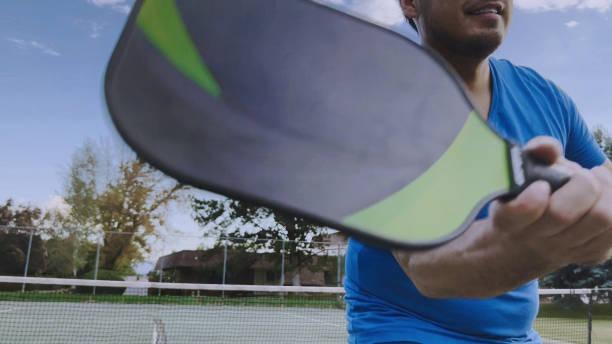
Phase 1: The Gear (Do Not Fail Before You Start)
Most beginners fail here. They go to Amazon, buy a cheap pickleball paddle set for $30, and head to the court.
Big mistake.
Those cheap wooden or aluminum paddles vibrate like a tuning fork. They offer zero control and are the fastest way to develop pickleball tennis elbow.
Here is the only gear checklist you need:
- The Paddle: You don’t need a $250 pro paddle, but you MUST avoid the junk. Look for these three “Golden Specs”:
- Core: Polymer Honeycomb Core (essential for absorbing shock).
- Surface: Raw Carbon Fiber (T700 is the standard for spin).
- Thickness: 16mm vs 13mm pickleball paddle rule? Go with 16 mm. Thinner paddles are too poppy and hard to control.
- My Pick: Check out our [Entry-Level T700 Series]. It has pro specs at a beginner price.
- The Shoes: Do not wear running shoes! This is non-negotiable. Running shoes are designed for forward motion. In pickleball, you move sideways. Wearing running shoes with high foam soles is the #1 cause of rolled ankles on the court. You need “court shoes” (tennis or volleyball shoes) with lateral support.
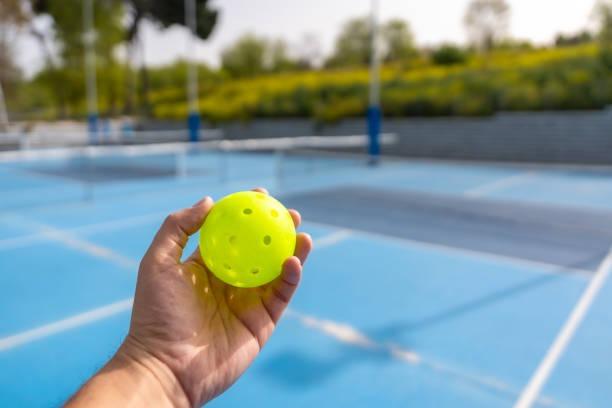
- The Balls: Outdoor balls (40 holes) are harder and faster. Indoor balls (26 holes) are softer. Know the difference so you don’t bring a soft indoor ball to a windy outdoor court.
Pro Tip: Confused about weight? Read my guide on lightweight vs. midweight pickleball paddles to see why “light” isn’t always right for beginners.
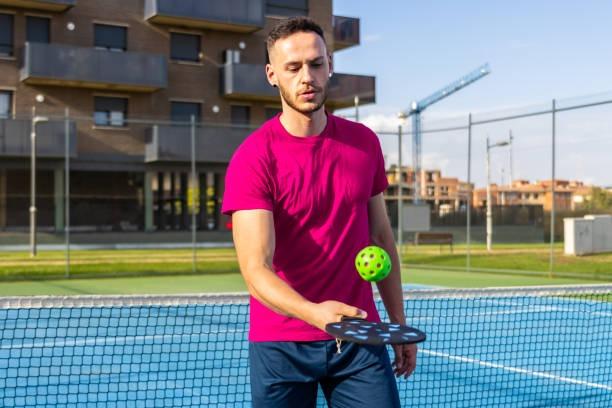
Phase 2: The Rules (Simplifying the Chaos)
You don’t need to memorize the entire rulebook yet. You just need to know the “Big 3” that confuse everyone.
1. The Two-Bounce Rule (The Game Changer)
This is what makes pickleball unique and different from tennis.
- When the ball is served, the receiving team must let it bounce.
- Then, the serving team must let the return shot bounce.
- Only after these two bounces can you start hitting volleys (hitting the ball in the air).
- Why? It prevents the serving team from rushing the net and smashing the ball instantly. It levels the playing field.
2. The Kitchen (No-Volley Zone)
See that 7-foot box near the net? That’s the kitchen.
- The Rule: You cannot touch the kitchen line or stand inside it while hitting a volley.
- The Strategy: The Kitchen is not lava. You can step in it if the ball bounces in it first (a “dink”). The game is won or lost by controlling this line.
3. Scoring (11-10-2?)
It sounds like a locker combination. It’s simply [Your Score] – [Opponent’s Score] – [Server Number].
- You only score points when your team is serving.
- Games are usually played to 11, and you must win by 2.
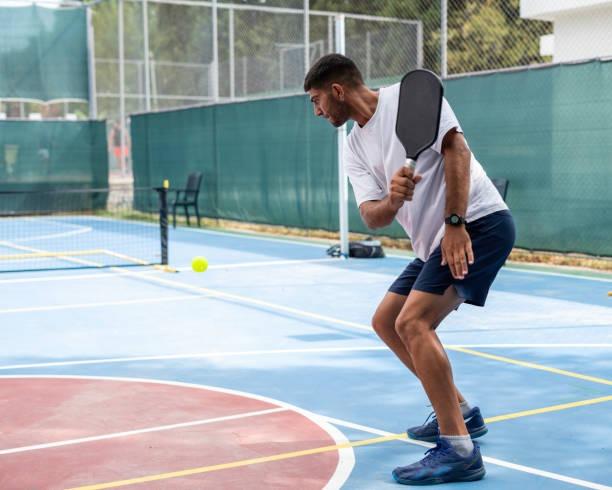
Phase 3: Training (Skip the Gym, Hit the Wall)
Many guides tell you to go do squats or deadlifts. While fitness is great, that won’t help you hit the ball tomorrow. The fastest way to improve your hand-eye coordination is wall drills.
The “15-Minute Wall Routine”: Find a flat wall (garage, basement, brick wall). Tape a line 34 inches high (net height).
- Forehand Dinks (5 mins): Stand 7 feet back. Hit soft shots that arc up and hit the wall above the tape line. Focus on control, not power.
- Backhand Dinks (5 mins): Same thing, but backhand only. This is usually a beginner’s weak spot.
- Volleys (5 mins): Step closer (4-5 feet). Hit the ball out of the air. Keep your paddle up and wrists firm.
This builds muscle memory faster than playing a chaotic game.
Technical Note: Struggling to keep the ball low? It might be your paddle’s “pop.” Read about pickleball paddle pop vs. power to understand why your balls are flying high.
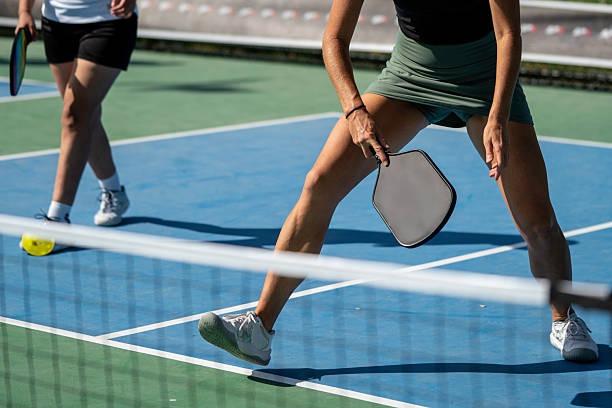
Phase 4: Paddle Deep Dive (Why Materials Matter)
I promised to explain why beginners get confused. It’s because marketing is messy. Here is the truth about what your paddle is made of.
1. Carbon Fiber vs. Fiberglass
- Fiberglass: It’s cheap, and it’s “poppy.” The ball shoots off the face. For a beginner, this often means popping the ball up for your opponent to smash.
- Carbon Fiber (T700): This is the gold standard. The T700 raw carbon texture grabs the ball, creating spin. More importantly, it is rigid, giving you a consistent “sweet spot.”
- Verdict: Spend the extra $20 for Carbon. It pays off in control.
2. The Core Thickness
- 13 mm (Thin): hits hard, feels harsh, vibrates more.
- 16 mm (thick): feels like hitting a pillow. It absorbs the energy, giving you more control and protecting your elbow.
- Verdict: Always start with 16 mm.
3. Weight matters
Don’t fall for the “Ultra-Light” marketing. A paddle under 7.3 oz is unstable. If you block a hard shot, the paddle will twist in your hand. A midweight pickleball paddle (7.8 oz – 8.2 oz) is stable and absorbs shock for you.
Phase 5: Etiquette (How Not to Look Like a Rookie)
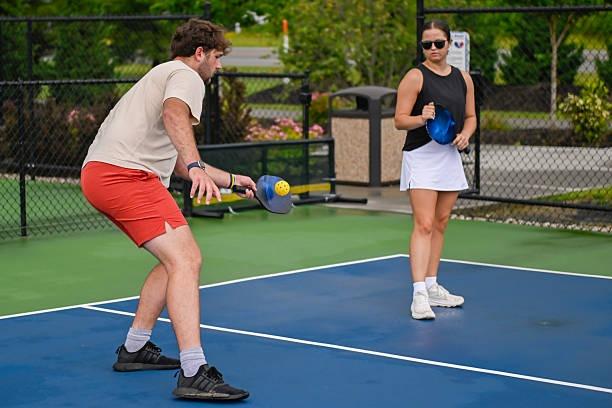
Now you are ready to join “Open Play.” Here is how to look like you belong:
- Announce the score loudly before every serve. It signals to everyone that play is starting.
- Paddle Taps: At the end of every game, meet at the net and tap paddle handles. It’s the handshake of pickleball.
- Call “Out” Loudly: If a ball lands out on your side, call it immediately. When in doubt, call it “IN” (favor the opponent). Integrity is everything.
Summary: Your Next Step
Pickleball is easy to learn but hard to master. The biggest barrier to entry isn’t skill—it’s confidence. And confidence comes from having the right gear and knowing the basics.
Don’t be the player who quits after a week because their $20 wooden paddle gave them a sore wrist or because they bought running shoes and rolled an ankle. Treat yourself to equipment that respects your body and your potential.
Ready to gear up? Skip the research rabbit hole. We’ve built the perfect beginner-to-intermediate paddle. It has the 16 mm core for forgiveness and the T700 raw carbon face for spin—without the big brand markup.
👉 [Shop the Beginner’s Choice T700 Collection]

About Jason Simmons
Jason S. Simmons has been obsessively dissecting racket sports equipment for over a decade. After transitioning from competitive tennis to Pickleball in 2020, Jason realized the market was flooded with confusing marketing jargon and overpriced gear.
His Mission: To help players—especially seniors and those recovering from Lateral Epicondylitis (Tennis Elbow)—find the perfect paddle setup that balances power, control, and health.
Why Trust Jason?
- Material Science Geek: He doesn't just play; he analyzes. From the weave patterns of Toray T700 Raw Carbon Fiber to the density of Polypropylene Honeycomb Cores, Jason understands the physics behind the "pop."
- Data-Driven Testing: Jason has play-tested over 50+ models, evaluating them on Swing Weight, Twist Weight, and Dwell Time rather than just subjective "feel."
- On the Court: Based in the US, Jason actively competes in regional 4.5+ level leagues. When he isn't drilling his third-shot drops, he is likely inspecting paddles for Core Crushing or Delamination issues.
Jason believes that "A dead paddle kills your game," and is dedicated to teaching players how to maintain their grit surface for peak performance.
View all posts by Jason Simmons