A Comprehensive Guide to Pickleball Paddles for Teens: How to Choose the Best Paddle for Your Child
Let’s be real: Buying sports gear for a teenager is a nightmare. You buy them expensive basketball shoes, and they outgrow them in three months. You buy them cheap gear; they refuse to use it because it’s “not cool” or “feels like a toy.”
But when it comes to pickleball, the stakes are significantly higher than just aesthetics or budget.
I’m Jason, and in my years of coaching and analyzing equipment, I’ve seen a disturbing trend. Parents often hand their 13-year-old a heavy, wooden Amazon paddle—or worse, a discarded tennis racket—and say, “Go have fun.”
The result? Wrist pain within 20 minutes, frustration with missing shots, and a kid who never wants to step on the court again.
Choosing a paddle for a growing body isn’t about buying a “mini” version of an adult paddle. It’s about physics. It’s about protecting developing joints while giving them enough power to compete with their friends.
In this comprehensive guide, I’m cutting through the marketing noise. I’ll show you exactly how to pick a paddle that protects your child’s arm, fits your budget, and—most importantly—makes them actually want to play.
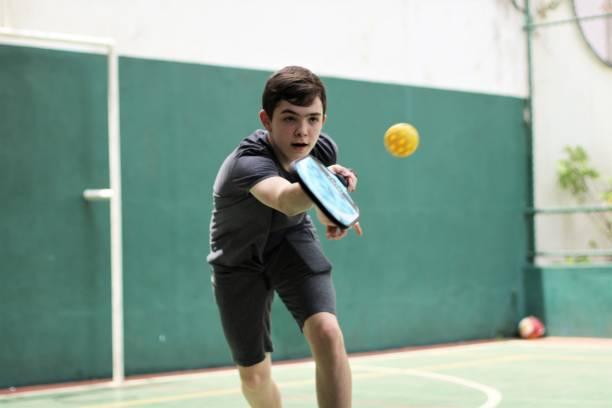
Part 1: The “Teenager Problem” (Why Adult Paddles Don’t Work)
Teens are in a unique physiological phase. They are too strong for “kids’ paddles” (which are basically toys), but their tendons, joints, and growth plates are still developing.
Using a standard adult paddle—which often weighs 8.0 oz or more—can lead to three hidden risks:
1. The Torque Trap (Wrist Strain)
Physics dictates that force = mass x acceleration. When a teen swings a paddle that is too heavy (mass) at a fast speed (acceleration), the “twist” or torque generated upon ball impact is significant. Unlike adults, teens often lack the forearm muscle density to absorb this shock. The result? The shock travels straight to the wrist and elbow.
2. The “Growth Plate” Factor
For teens aged 10-14, growth plates in the elbow and wrist are often still open or just fusing. Repetitive stress from a vibrating, heavy paddle can cause inflammation—a condition specifically known as “Little League Elbow,” which is now appearing frequently as pickleball tennis elbow in youth players.
3. The “Pop” Frustration
Cheap fiberglass or wooden paddles act like trampolines. The ball pops off the face instantly. A teen with developing motor skills needs control, not erratic power. If they hit 10 balls and 8 fly out of bounds, they will get frustrated and quit. They need gear that forgives their mistakes.
Part 2: The Golden Specs (The Technical Deep Dive)
Stop guessing at the sporting goods store. Here are the exact specifications you need to look for and the science behind why they matter for teens.
1. Weight: Swing Weight vs. Static Weight
Most parents just look at the total weight (e.g., 7.8 oz). But for teens, swing weight matters more. This is how heavy the paddle feels when you swing it.
- The Rule: Look for a paddle that is headlight or well-balanced.
- The Spec: Stick to 7.0 oz to 7.8 oz.
- Warning: Avoid anything over 8.0 oz. While heavy paddles generate more power, they slow down hand speed at the net, leaving your teen vulnerable to getting hit by the ball.
2. Grip Size: The “Pinky Test”
This is the #1 mistake I see. Most adult paddles come with a 4.25″ or 4.5″ circumference grip. That is likely too big for your teen.
- The Risk: If the handle is too big, the child has to squeeze the paddle with a “death grip” to prevent it from twisting. This constant tension causes forearm fatigue instantly.
- The DIY Measurement: Have your teen hold the paddle. You should be able to fit your pinky finger between their fingertips and the heel of their hand. If you can’t, the grip is too small. If there is a huge gap, it’s too big.
- My Recommendation: Buy a paddle with a smaller grip (4.0″ to 4.125″). You can always build it up with an overgrip (which costs $2). You cannot make a big grip smaller.
3. Core Thickness: The Safety Net
- 13 mm (Thin Core): These are common in cheap sets. They vibrate a lot and have a small sweet spot.
- 16mm (Thick Core): This is the gold standard for youth. A 16 mm polymer honeycomb core acts like a thick sponge. It creates a longer “dwell time” (the ball stays on the paddle longer), giving the teen more control and absorbing the harmful vibrations before they reach the arm.
4. Surface Material: Why Texture Matters
Teens care about performance. They watch TikToks of pros hitting massive spin shots.
- Fiberglass: Slippery and poppy. Hard to control.
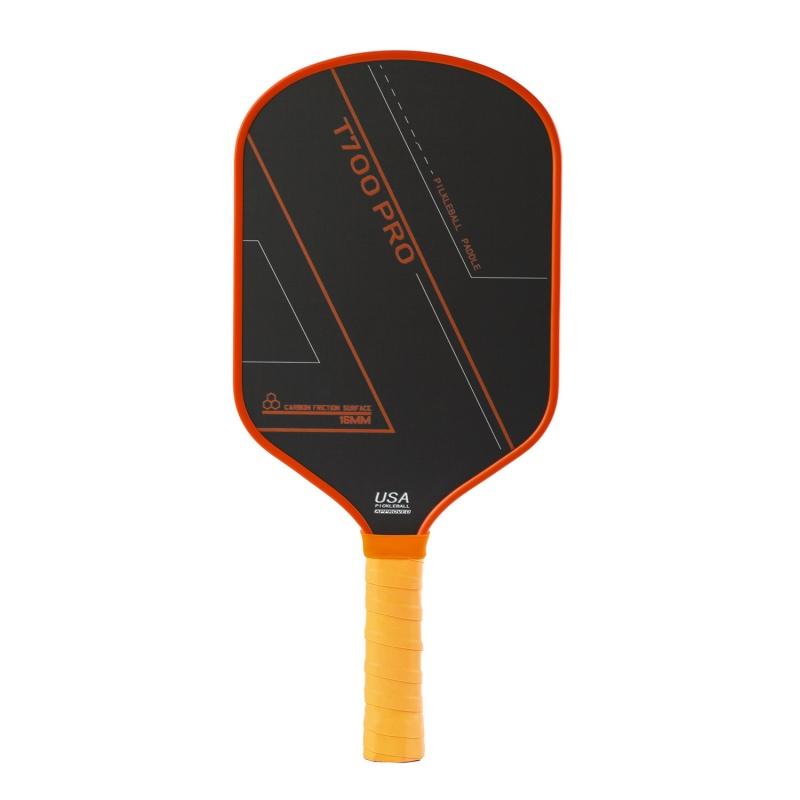
- T700 Carbon Fiber: This material has a gritty texture. It allows the teen to “brush” the ball and generate topspin. This helps keep the ball in the court, instantly improving their game and confidence.
Part 3: Recommendations by Age & Play Style
Not all teens are the same. A 12-year-old beginner needs different gear than a 16-year-old varsity athlete.
Group A: The “Just for Fun” Pre-Teen (Ages 10-12)
- Profile: Plays occasionally with family, smaller hand size, developing coordination.
- Goal: Safety, ease of use, immediate fun.
- Recommended Specs:
- Shape: Standard / Wide Body (massive sweet spot).
- Weight: Lightweight (7.0 – 7.4 oz).
- Core: 16 mm polymer (crucial for forgiveness).
- The Choice: Avoid the elongated shapes; they are top-heavy. Stick to the classic square shape.
Group B: The “Competitive” Teen (Ages 13-16)
- Profile: Athletic, competitive, wants to beat their friends (and you), cares about “looking pro.”
- Goal: Spin, power, reach.
- Recommended Specs:
- Shape: Elongated (provides extra reach and leverage for serves).
- Weight: Midweight (7.6 – 7.9 oz).
- Surface: Raw Carbon Fiber (T700).
- The Psychology: At this age, equipment is status. They want a paddle that looks like what the pros use. Investing in a carbon fiber paddle here is an investment in their long-term interest in the sport.
Part 4: The Budget Talk (Price vs. Value)
“Jason, do I really need to spend $150 on a paddle for a 14-year-old?” No. But you shouldn’t spend $30 either.
Here is the price-to-value breakdown for youth paddles:
- The “Toy” Tier ($20-$40): usually wood or cheap composite. Heavy, vibrates, and breaks in a month. Verdict: Avoid. The medical bill for tennis elbow is higher than the savings.
- The “Sweet Spot” Tier ($60-$90): This is where you find Direct-to-Consumer (DTC) brands. You get T700 carbon fiber, 16mm cores, and thermoformed edges—the same tech as the big brands, but without the marketing markup. Verdict: Best Value.
- The “Hype” Tier ($200+): These are great paddles, but for a teen who might leave it on the bus or scrape it on the asphalt? It’s risky. Unless they are playing tournaments, this is diminishing returns.
Our Solution: We built our [Teen-Friendly T700 Series] specifically to hit that $60-$90 sweet spot. Pro materials, parent-friendly prices.
Part 5: Maintenance & Responsibility
Teens are notoriously rough on gear. Teaching them to care for their paddle is part of the sport.
- The “Edge Guard” Rule: Never buy an “edgeless” paddle for a teen. They will scrape it on the ground trying to dig out a low ball. A sturdy edge guard prevents paddle delamination.
- The “Hot Car” Warning: Explain to them that pickleball paddle heat damage is irreversible. Leaving a paddle in a hot car trunk will melt the internal adhesive and ruin the core (creating a “dead spot”).
- The Cleaning Ritual: Carbon fiber paddles collect dust, which kills spin. Get them a [pickleball paddle eraser] (it looks like a rubber block). It’s a cheap accessory that makes maintenance satisfying and keeps the paddle performing like new.
Part 6: FAQ (Parents Also Ask)
Q: My child plays tennis. Can they use the same grip size? A: Usually, no. Pickleball requires more wrist action than tennis. We generally recommend going one size smaller than their tennis grip to allow for better wrist snap at the net.
Q: Is a heavier paddle better for a strong teen? A: Not necessarily. In pickleball, hand speed at the net (blocking volleys) is more important than raw power. A paddle over 8.2 oz is often too slow for the fast-paced kitchen exchanges, even for a strong teen.
Q: How do I know if the paddle is broken? A: If the sound changes from a solid “thud” to a hollow or raspy “crunch,” or if you press on the face and it feels soft/mushy, the core might be crushed.
Conclusion: An Investment in Confidence
Choosing the right pickleball paddle for your teen isn’t just about buying a piece of sporting equipment. It’s about giving them a tool that fits their body mechanics.
A paddle that is too heavy or vibrates too much teaches them that “sports hurt.” A paddle that fits perfectly—light, forgiving, and gritty—teaches them that “sports are fun” and that they can actually master a new skill.
Don’t overthink it. Stick to the 16 mm core for safety, keep the weight under 8.0 oz, and opt for carbon fiber so they can grow into the sport rather than growing out of their gear.
Ready to get them on the court? Browse our expertly curated collection of [Teen-Friendly 16mm Carbon Paddles]. We designed them to be light enough for safety but high-tech enough to dominate the local park.
(Get 10% off your first youth order with code: TEENPOWER)
Frequently Asked Questions About Pickleball Paddles for Teens
What is the best paddle weight for a 13-year-old?
How do I choose the right grip size for my teenager?
Why is a 16mm core paddle recommended for teens?
Should I choose a Carbon Fiber or Fiberglass paddle for my child?

About Jason Simmons
Jason S. Simmons has been obsessively dissecting racket sports equipment for over a decade. After transitioning from competitive tennis to Pickleball in 2020, Jason realized the market was flooded with confusing marketing jargon and overpriced gear.
His Mission: To help players—especially seniors and those recovering from Lateral Epicondylitis (Tennis Elbow)—find the perfect paddle setup that balances power, control, and health.
Why Trust Jason?
- Material Science Geek: He doesn't just play; he analyzes. From the weave patterns of Toray T700 Raw Carbon Fiber to the density of Polypropylene Honeycomb Cores, Jason understands the physics behind the "pop."
- Data-Driven Testing: Jason has play-tested over 50+ models, evaluating them on Swing Weight, Twist Weight, and Dwell Time rather than just subjective "feel."
- On the Court: Based in the US, Jason actively competes in regional 4.5+ level leagues. When he isn't drilling his third-shot drops, he is likely inspecting paddles for Core Crushing or Delamination issues.
Jason believes that "A dead paddle kills your game," and is dedicated to teaching players how to maintain their grit surface for peak performance.
View all posts by Jason Simmons