Pickleball Paddle Grip Size: Find Your Perfect Fit
Paddle Buying Guide · Informational · KD 7
Pickleball Paddle Grip Size: Find Your Perfect Fit
Pickleball paddle grip size affects comfort, control, and how much you squeeze the handle. Most players compare 4.0–4.25 inch grip circumferences. If you are between sizes, start slightly smaller and use an overgrip to add thickness.
Short answer
The decision starts with specs, not brand gravity.
This article targets pickleball paddle grip size. It follows the Rawvanta rule: compare the build before the logo. Material. Core. Shape. Weight. Grip. Price logic. Then decide.
Buyer framework
Use this table before you compare prices.
| Stage | What to compare | Why it matters |
|---|---|---|
| First filter | Your current problem | Control, power, comfort, spin, value, or replacement timing |
| Spec check | Material + core | Face material and core thickness usually explain more than adjectives |
| Fit check | Weight + shape + grip | A good spec can still feel wrong if handling is wrong |
| Risk check | Return policy | A paddle should be judged during real points |
Step 01
How to tell if grip size is wrong
Too small: you may over-squeeze and lose touch. Too large: it can be harder to adjust the paddle face quickly. The right grip feels secure without making your hand work.
Handle length matters too. A player using a two-handed backhand may care more about handle length than circumference alone.
Step 02
Overgrip as an adjustment tool
An overgrip can add thickness, improve sweat handling, and refresh the feel of an older handle. It is one of the cheapest upgrades in pickleball.
But an overgrip cannot make a short handle longer or fix a paddle that is fundamentally wrong for your swing.
Step 03
Rawvanta accessory angle
This is a cross-sell article, not a hard sell. The useful CTA is simple: replace overgrips before replacing a good paddle if the only issue is handle feel.
Before checkout
Check these details on the product page.
The article gives you the decision logic. The product page has to prove the build. Before you buy, confirm the face material, core thickness, weight range, shape, grip circumference, handle length, certification notes, return window, and whether the price has a reason beyond discount language.
If a product page hides any of those details, treat that as a signal. Not proof that the paddle is bad. A signal that you do not have enough information yet. Rawvanta’s own rule is simple: a serious paddle page should let a serious buyer compare without guessing.
| Spec | What to look for | Risk if missing |
|---|---|---|
| Face material | Carbon fiber, raw carbon, fiberglass, or composite should be stated directly. | You cannot compare feel, spin potential, or value. |
| Core thickness | 13mm, 16mm, or 20mm should be visible before checkout. | You may buy pop when you needed control, or softness when you wanted speed. |
| Weight and shape | Check static weight, shape family, and handling notes. | The paddle can feel slow, unstable, or too specialized. |
| Return terms | Look for a real court-test window, not only unused-at-home language. | You carry all the feel risk after the box arrives. |
Avoid this
Three mistakes that make pickleball paddle grip size harder than it needs to be.
First: starting with price. Price matters, but it should come after fit. A lower price is useful only when the build matches the way you play.
Second: treating carbon fiber, thickness, or weight as one-size-fits-all. Specs are not medals. A 13mm paddle is not automatically more advanced. A 16mm paddle is not automatically better. A carbon face still needs the right core and shape.
Third: ignoring the test window. You can read specs, compare tables, and still need to hit actual balls. The best buying path reduces the cost of being wrong.
Recommended path
Where to go next on SalePickleballPaddles.com.
Rawvanta is the brand name. SalePickleballPaddles.com is the domain. Use the site structure this way: parent guide for learning, category page for narrowing, product page for confirming the exact build.
Karen’s note
Why Rawvanta shows up in this article.
Karen Whitfield spent eleven years reading supplier sheets and price structures. Her habit is simple: ask why the price is what it is. Rawvanta is not trying to be the loudest paddle brand. It is trying to make the spec sheet and the price logic easier to inspect.
If the category fit is right, use Rawvanta as the factory-direct comparison point: T700 carbon options, 16mm polymer core direction, clear weight and grip notes, and a 30-day court-test buying path.
FAQ
Pickleball Paddle Grip Size: Find Your Perfect Fit FAQ.
Is it better to choose a smaller or larger grip?
If you are between sizes, many players start slightly smaller and add an overgrip. Too large is harder to adjust downward.
Should I buy by brand or by specs?
Buy by specs first. A good brand can help with confidence, but the paddle still needs the right material, core, shape, weight, and return terms.
Is a higher price always better?
No. A higher price may include R&D, quality control, sponsorship, retail layers, or brand overhead. The useful question is what part of the price shows up in the paddle.
Where should I go after reading this guide?
Use the relevant category page to compare paddles by need, then check the product page for exact material, core thickness, weight, grip, and return terms.
About Jason Simmons
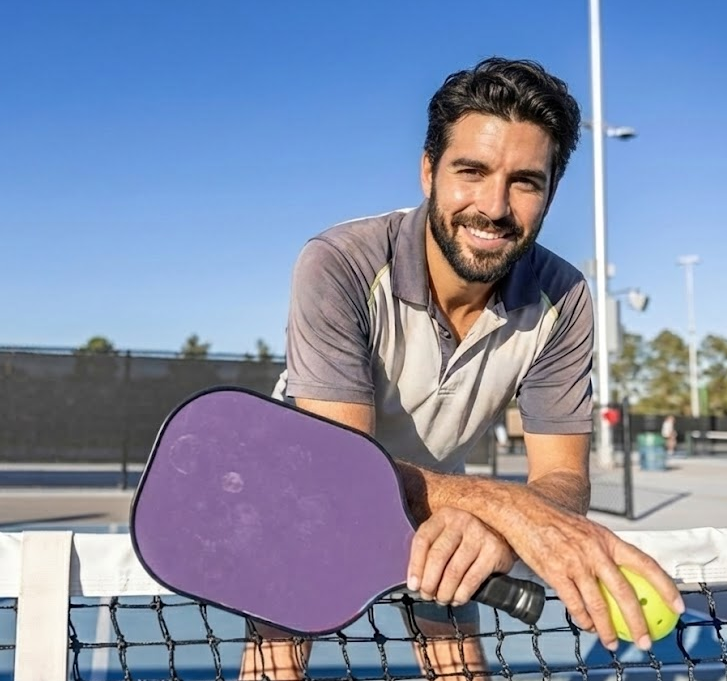
Jason S. Simmons has been obsessively dissecting racket sports equipment for over a decade. After transitioning from competitive tennis to Pickleball in 2020, Jason realized the market was flooded with confusing marketing jargon and overpriced gear.
His Mission: To help players—especially seniors and those recovering from Lateral Epicondylitis (Tennis Elbow)—find the perfect paddle setup that balances power, control, and health.
Why Trust Jason?
- Material Science Geek: He doesn't just play; he analyzes. From the weave patterns of Toray T700 Raw Carbon Fiber to the density of Polypropylene Honeycomb Cores, Jason understands the physics behind the "pop."
- Data-Driven Testing: Jason has play-tested over 50+ models, evaluating them on Swing Weight, Twist Weight, and Dwell Time rather than just subjective "feel."
- On the Court: Based in the US, Jason actively competes in regional 4.5+ level leagues. When he isn't drilling his third-shot drops, he is likely inspecting paddles for Core Crushing or Delamination issues.
Jason believes that "A dead paddle kills your game," and is dedicated to teaching players how to maintain their grit surface for peak performance.
View all posts by Jason SimmonsRelated Posts

Pickleball Paddle Dead Spot: How to Tell + What to Do
A pickleball paddle dead spot is an area of the face that no longer rebounds consistently. You can detect it by sound, feel, bounce response, and shot beha
How Long Does a Pickleball Paddle Last? (Signs It’s Time)
A pickleball paddle can last anywhere from a few months to more than a year depending on play frequency, surface wear, edge damage, core breakdown, storage
Best Pickleball Paddles for Seniors: Lightweight & Low-Vibration
The best pickleball paddles for seniors are usually easy to handle, stable on contact, and not overly harsh. Look for moderate weight, a 16mm or 20mm core,
Looking for a Selkirk Alternative? Read This First.
A Selkirk alternative makes sense if you want similar spec logic without paying for the full brand premium. Compare face material, core thickness, shape, w
Best Pickleball Paddles for Tennis Elbow: Tested Review
For tennis elbow, look for a paddle that feels stable, not harsh: lower swing strain, 16mm or thicker core, neutral balance, comfortable grip, and a return
What is T700 Carbon Fiber? Why It Matters for Your Paddle
T700 carbon fiber is a performance-oriented carbon grade commonly used in serious pickleball paddle faces. It matters because it can support a lighter, str
Thermoformed Pickleball Paddle: Is It Worth the Hype?
A thermoformed pickleball paddle uses heat and pressure to bond the face, core, and edge structure into a more unified build. It can feel more powerful and
Pickleball Paddle Core Thickness: 16mm vs 13mm Explained
A 16mm pickleball paddle usually feels softer and more controlled. A 13mm paddle usually feels quicker and poppier. Choose 16mm for resets, drops, and forg
Are Cheap Pickleball Paddles Actually Good? (Honest Answer)
Cheap pickleball paddles can be good if the low price comes from lower overhead, not weaker materials or hidden specs. A cheap paddle is risky when it hide
Control vs Power Pickleball Paddle: Which Should You Choose?
Choose a control paddle if you lose points on resets, drops, blocks, and inconsistent depth. Choose a power paddle if your soft game is stable and you want
Carbon Fiber vs Fiberglass Pickleball Paddle: The Data
Carbon fiber pickleball paddles usually feel more controlled and connected. Fiberglass paddles often feel livelier and more budget-friendly. Carbon is not
Pickleball Paddle Weight Guide: How Light is Too Light?
Most pickleball paddles sit around 7.2–8.5 oz. Lighter paddles help hand speed. Heavier paddles can add stability. For many players, the safe middle is 7.6